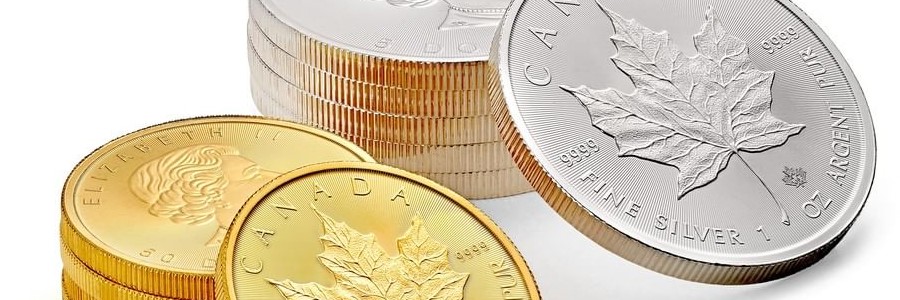
Now May Be The Time For Gold

The gold market has seen some significant ups and downs this past year. From riding high on easy monetary policy one minute to being drained on large rate hikes the next, the yellow metal has been all over the place. That trend has dissipated in recent months, however, as the market has maintained a trading range from $1800 to $1900. The bulls and the bears appear ready and waiting to jump on the next significant catalyst which could arrive at any time now. Such a catalyst could take time to develop, however, and the longer it takes the more time the metal may stay range-bound.


A big positive for the gold bulls may be last week’s 75-basis point rate hike. The hike was the largest by the Fed in about 30 years and may demonstrate that the central bank is quite serious about fulfilling its mandate to control price pressures. As a positive for the gold bulls, the market held up quite well in the aftermath of the rate hike and is still trading in its recent range. The metal likely held its ground as the Fed may have thrown up a massive red flag when it raised rates by 75-basis points, the largest increase in almost 30 years. The Fed is determined to fight inflation, and in doing so, may become increasingly likely to push the economy into a recession.


Although the Fed has signaled that rates could hit 3.50% by the end of the year, investor fear could keep gold in the mix even as yields continue to rise. Fears over the Fed sending the economy into recession may have changed the relationship between gold and interest rates. Gold may still rise, and rise substantially, even as the Fed looks to hike rates to combat inflation.


Fears over a Fed misstep may be overdone at this point, and the central bank could still possibly achieve a soft landing despite a narrowing window. The labor market remains healthy, and if Americans are able to hold onto their jobs, a recession can still be avoided.


Despite the Fed’s recent action, it remains well behind the inflation curve. Some analysts have argued that the Fed would need to hike rates to the 20% level (As was done in the Volcker days) to get inflation to a tolerable level. This seems extremely unlikely at this point in time, however, and investors may just have to remain nimble and nervous when it comes to what the Fed may be able to accomplish.


The market remains stuck in neutral as it sits near the $1850 level. The $1800 and $1900 levels remain key areas of support and resistance. Whichever level is breached first, on a closing basis, could determine gold’s trend for the next several months. The market could, however, spend even more time in its recent range as investors await more moves from the Fed and the effects of those moves to work their way through the economy.

Gold Higher After Huge Hike

Following Wednesday’s surprise 75-basis point rate hike from the Fed, the gold market is higher as stocks are getting hammered. Although the 75-point hike was not totally unexpected, markets believed the Fed would raise rates by 50-points. The higher rate hike and expectations for another 75-point hike at the next FOMC meeting have heightened recession fears, and there may now be nothing to prevent a major economic slowdown from coming. Fears of that slowdown are almost certainly the primary factor behind today’s major stock sell-off.


The plunging of the Japanese Yen versus the dollar is also impacting markets. The yen has shed about a third of its value against the greenback over the last 1.5 years. As the Bank of Japan keeps its monetary policy easy while the rest of the world is raising rates, this trend could continue. The weakness of the yen may be another symptom of a sickness within the economy and more trouble to come.


These factors may be limiting the downside in precious metals. The bulls have become frustrated, however, due to the lack of any sustainable rallies in the metals. An eventual rally may become increasingly likely the longer inflation remains strong, however, as history has shown that high inflation favors hard assets over paper. The bulls may be forced to simply bide their time and wait. Recent downside in the gold market may have produced an excellent long-term buying opportunity for patient investors.


Gold prices may also be moving higher today on some weaker than expected economic data. The latest reading of the Philly Fed Survey showed a contraction of -3.3. The figure missed market expectations by a large margin as estimates were looking for a reading of 5.1. The housing market also saw a sharp decline in May. Both housing starts and building permits slid more than expected in May, with a decline of 14.4% for housing starts and a decline of 7% for permits. Weaker than expected market data could give gold some buoyancy, as it may keep some from assuming the Fed will continue its recent hawkish path. Should the Fed decide to pause or reverse course on rate hikes, it could send some very confusing signals to markets, however, and possibly lead to an extended period of stagflation.


From a charting standpoint, the gold market remains stuck in neutral. The market is rapidly approaching resistance at the $1850 level today, and could stage a challenge of this area today or in the days ahead. On the other hand, if the bulls challenge $1850 and the market fails to breach it, a fresh wave of selling could enter the market and finally take prices below key support at the $1800 level. For the time being, the $1800 and $1900 levels are areas of focus for the bulls and the bears. Whichever level is breached first, on a closing basis, could determine the metal’s trend for the months to come.

Rising Dollar And Yields Weighing On Gold


The gold market is a bit softer today as the bears look to follow through on recent selling. A stronger dollar and rising yields are the primary culprits today behind gold’s weakness and may continue to limit the metal’s upside in the weeks ahead. Another hot reading on inflation today has done little if anything to help the bulls.


The Producer Price Index was released today and showed a rise of 10.8% year-over-year. The index showed a .5% rise from April figures and the readings were basically in line with market expectations. Markets showed little reaction to the data, therefore, as inflation remains a hot topic. Despite the muted reaction to the PPI data, inflation is in fact running very hot across the globe and may be a bullish factor for gold and metals over the long-term.


Although the PPI data is important, the main  area of focus for this week is the FOMC decision due for release tomorrow afternoon. The Fed began their policy meeting Tuesday morning and will wrap it up with a decision on policy Wednesday afternoon. It is widely expected that the Fed will raise the Fed Funds Rate by 50-basis points tomorrow. The Fed is also likely to do so at its next meeting as well, and possibly even beyond that. Some analysts believe the Fed could even hike rates by 75-points this week. Fed Chairman Jerome Powell is set to hold a press conference after the decision and investors are likely to pay close attention. Powell could provide clues about the Fed’s outlook and its plans going forward.


Outside markets are not doing much to help gold today. Crude oil is higher, trading at over $122 per barrel. The Dollar Index is also stronger on the day, trading not far from the recent 20-year highs touched earlier. Yields for the benchmark Ten-Year Note are at 3.3%, not far off from recent 14-year highs reached at 3.371%.


The bears remain in control of gold on the daily chart. The bears will look to produce a close below technical support at $1800. A close below this level could spell trouble for the market and a fresh wave of sellers could potentially enter if the market closes below this level. The bulls will look to first take out the week’s highs around $1882 and then produce a close above the $1900 level.


The Fed meeting and policy decision Wednesday has the potential to move markets, and move them dramatically. Should the Fed take an even more hawkish tone, it could send stocks sharply lower while also weighing on gold. Should the Fed sound more dovish, however, both stocks and gold could potentially rally. At risk also is upside for the Dollar Index which has been moving higher on the notion of higher rates. A weaker dollar could put the gold bulls back in the driver’s seat and could send the market back towards resistance.

Major Reversal Sends Gold To Four-Week High

The gold market erased solid early session losses today to reverse course and shoot higher. Spot gold prices are now sitting around a four-week high as risk aversion again takes hold and investors look for assets to hedge against the hottest inflation in over 40 years. The bulls have now scored a technically bullish “outside day” on the charts as well as a bullish weekly high close. Today’s stronger performance may lead to more buying in the sessions ahead as technical traders and momentum players look to get long and ride the wave.


Today’s release of the latest Consumer Price Index data has been a market mover. Inflation for the month of may registered a rise of 8.6% year-over-year. The rise beat expectations sharply, which were looking for a rise of 8.2%. Some analysts had thought today’s CPI figures may reinforce the notion that inflation has peaked. The data, however, suggests that inflation is far from peaking as of yet and could have more room to run. The core rate of inflation, stripping out volatile food and energy prices, rose by 6%.


The CPI data may be viewed as a mixed bag by investors. On one hand, the higher rate of inflation may keep real interest rates low, a gold positive. On the other hand, however, is the fact that the high inflation rate may keep the Fed hiking aggressively in the year ahead. The data would seemingly add some upside risk to the Fed Funds Rate at the end of the year. The central bank has already suggested it will raise rates by 50-basis points at its next two consecutive meetings. The markets are pricing in a third such hike after that, and with today’s hot inflation figures the Fed could hike even more than that. A 75-point rate hike is not off the table, for example,  and the Fed could look to get a handle on price pressures quicker by hiking more at each meeting.


Whatever the Fed does or does not do, it will likely be met with considerable criticism and anxiety. If the Fed does in fact keep hiking and rates are at or above the 3.5% level at the end of the year, it is difficult to imagine stocks recovering and getting near previous highs again. On the other hand, if the Fed does not follow through or even reverses course, it could put the economy into an extended period of stagflation. Whatever the case may be, markets could be in store for rising volatility and a lot of selling in the months ahead.


The months ahead may be filled with anxious investors and wobbly markets. The Fed will either drive the economy to a soft landing or a hard landing. The hard landing scenario seems more likely at this point and the Fed could find itself wanting to lower rates again by the end of the year as equities go into crash mode.

Gold Awaiting Next Week’s Fed Meeting

The gold market is still not far from the $1850 level and could remain very subdued until next week. The FOMC meeting will take place next week and the announcement on policy is expected at its conclusion Wednesday afternoon. The three-week holding pattern that gold has been stuck in could continue until that day. Prices have been stuck in neutral as investors may

be awaiting more clarity from the Federal Reserve on its plans moving forward.


The CME Fedwatch tool currently shows a greater than 90% likelihood the Fed will again raise rates by 50-basis points next week. The Fed has suggested that it will likely raise rates by 50-points at its next two consecutive meetings while markets have priced in the Fed doing so at the next three consecutive meetings. What’s at stake with next week’s meeting? A lot. For starters, the Fed will need to keep its credibility and thus hike accordingly as it has suggested it will do. Although there may be some significant knee-jerk reaction to the Fed announcement, it is also very important for investors to remain focused on the bigger picture.


Friday’s Consumer Price Index data may shed some light on the bigger picture. Inflation is expected to show a year-over-year rise for May of 8.2%. This would indicate a slight drop from April’s reading of 8.3% and could add more credibility to the notion that inflation may have already peaked. Should the figure come out higher than expected, however, the Fed could see it come under serious pressure to hike even more aggressively and drain liquidity from the system. In such a scenario, markets would be unlikely to take the news well and could find themselves being sold heavily. In that case, gold could stand to benefit as investors may look for perceived safe havens in which to put capital to work in. Even if the CPI data does suggest inflation has peaked, no one knows how long it may take for prices to back down. Inflation could be problematic for some time. Any missteps by the Fed during this period could be catastrophic and could lead to an extended period of stagflation or even a recession.


The Fed has a lot to deal with currently and is on very fragile footing. Having backed itself into a corner, the central bank may look to leave its options as open as possible while it tries to navigate the rough economic waters. Adding to the Fed’s problems, the war in Ukraine is showing no signs of a slowdown as of yet and the stock markets remain in downtrends despite some recent rallying.


The $1800 and $1900 levels remain key for the bulls and the bears. Whichever way prices eventually do breakout, they are likely to continue moving in that direction for the months ahead. The dip has been purchased so far, however, the bulls just need a little more strength to establish a fresh trend higher.

Modest Gains For Gold

The gold market was quiet today, very quiet in fact. Spot prices are now at $1851.70 in late afternoon trade. The bulls did score a victory, of sorts, as prices were ankle to maintain trade above the $1850 level. The bulls have their work cut out for them, however, if they want to put some distance between the market price and this key technical level. The yellow metal saw some benefit today from stronger crude oil and lower stocks. Despite these bullish factors, the market may be fairly limited to the upside as rising bond yields and a dollar rebound take a toll.


The stock indexes were hit hard today. The benchmark Dow Jones Industrial Average finished down by nearly 300 points, while the tech-heavy Nasdaq did not fare much better for the day. Stock markets have shown some signs of a near-term bottom having been reached. The bulls have thus far been unable to establish a trend higher, however, and the markets remain fragile and vulnerable to further selling.


Market action across markets may accelerate tomorrow as some key data points for the week quickly approach. Thursday, the European Central Bank is set to meet to discuss and lay out its plans for tightening of monetary policy to combat inflation. On Friday, the U.S. will see the latest reading of the Consumer Price Index, a key inflation gauge. The index is supposed to show a rise of 8.2% in May year-over-year, a hair lower than the 8.3% year-over-year rise seen in April. Should the figure come out even higher than forecast, markets could see some significant selling pressure. If the data is weaker than forecast, however, it could greenlight stock investors to buy and the equity markets could see a substantial rally higher.


Weaker than expected inflation data could send some very mixed signals into markets. The Federal Reserve has said it will stay the course and continue to hike rates to battle inflation. If inflation has already peaked, though, would the Fed need to hike as aggressively as it now appears ready to do? Any change of plans by the central bank could put the U.S. economy into a bad space. Stagflation could become the new norm should the Fed stop short of using all of its tools and power to calm price pressures. Not only is this a negative in and of itself, but any changes by the Fed will also likely confuse investors, making them quicker to sell assets. This could cause heightened volatility across markets in the months ahead, with investors not knowing where to put their capital to work.


Gold is still stuck in neutral. The $1900 level remains a key resistance area for the bulls. The $1800 level remains a key level of support. A breakout above $1900 or below $1800 could dictate the metal’s direction in the months ahead. Price action may remain muted until such a breakout or breakdown occurs.

Bulls Step In To Buy The Dip

The gold market is higher Tuesday as the bulls step in and buy the dip. The day’s gains are keeping the recent uptrend alive and have pushed spot prices back to resistance at the $1850 level. Stock market weakness and crude oil strength may also be playing a role in gold’s upside today as bargain hunters pounce after recent price weakness. Not much has changed in the gold market in recent weeks, and the period of price consolidation could be nearing an end.


Inflation remains a major market influence and one that will likely continue to affect gold for months or years to come. Treasury Secretary Janet Yellen will be grilled by lawmakers today and Wednesday concerning the Biden Administration’s budget plans as well as how it plans to deal with rampant inflation. Yellen will likely discuss more of the same, suggesting that rate hikes may take care of inflation without slowing the economy down too much. Should Ms. Yellen express different concerns or a varying point of view from other officials, it could upset investors and produce a new wave of uncertainty within markets that could heighten volatility and increase selling in risk assets.


The Federal Reserve has already said it would use all of the tools at its disposal to combat inflation. Whether the central bank actually follows through with this plan is another source of concern for markets. The Fed is not known for always doing what it says it intends to do, and the pressure on the central bank is likely to mount considerably as stocks and risk assets sink further on higher interest rates. The true test of the Fed’s mettle likely won’t be seen for a few months, until it has had the chance to raise rates significantly higher from current levels. The risk of the Fed pausing or reversing course must be considered, as it could lead to an extended period of stagflation.


More inflation data is due for release later in the week. The European Central Bank is meeting Thursday and will likely lay out its plans for tighter policy in the months ahead. The U.S. Consumer Price Index is set for release on Friday. CPI is expected to show a rise of 8.2%, following April’s rise of 8.3%. A stronger-than-expected reading could send markets into a tailspin while a weaker-than-expected figure could provide some needed relief.


The gold market remains in no man’s land currently although the bulls are now showing some signs of life again. Spot gold is currently at $1850 on the nose. A breakout above this level in the days ahead could signal a rally, and prices could rapidly be lifted to attempt a breakout above the $1900 level. A failure near current levels, however, could have the opposite effect and could see prices decline significantly, possibly testing the $1800 level in short order. A breakout above $1900 or a breakdown below $1800 could dictate gold’s movement for the months ahead.

$1850 Still Elusive

The gold market is slightly lower in early trade Monday as the new trading week gets underway. Spot gold prices are just below key resistance at the $1850 area and could be pushed lower if the bulls fail to retake this level again very soon. Also adding support for gold are a lower dollar and stable treasury yields. Higher crude oil may also lend a hand as oil prices hit the $120 level overnight. Stocks are solidly higher in early action today as some degree of risk appetite is present. Easing Chinese Covid restrictions may be largely responsible for higher stock markets today, although it is important to keep in mind that restrictions could be enforced again at a later date if the virus sees a rapid spread again.


Although the week is full of data points, there are two key points that could influence market action this week. The European Central Bank will be meeting this Thursday, holding its regular monetary policy meeting. Investors will also see the latest data for the Consumer Price Index due for release on Friday. The CPI figures may be an area of focus for markets and is expected to show a rise of 8.2% following an April rise of 8.3%.


The meeting of the ECB may send another shot across the bow regarding global inflation. The central bank is likely to lay out its plans for tightening monetary policy as the European Union also wrestles with rampant inflation. Any aggressive rhetoric or plans of action from the ECB could move markets as the battle rages on between policy doves and hawks. The hawks seemingly have a strong upper hand currently and tighter policies may be expected not only in Europe and the U.S. but elsewhere as well. The global tightening period is already underway, and central banks will need to navigate the waters with extreme care. Overly aggressive action from global central banks could put the world economy into recession, while underwhelming action could allow inflation to accelerate even further.


The gold bears are still in control on the daily chart. A 2.5-month downtrend has now been negated, however, and the bulls appear to be working to establish a fresh trend higher. The $1800 and $1900 levels remain key for the market. The bulls and bears will look to produce a close above or below these levels and that close could determine price action for the months ahead. The bulls will, in the near-term, seek to take prices back above previous support at the $1850 level. A close above $1850 could encourage more buying interest and the market could then make a rapid run towards the $1900 area. A failure by the bulls to extend prices higher in the weeks ahead could provide ammunition for the bears. A downtrend could again develop that could take prices well below the $1800 level, possibly not stopping until the $1700 area is reached.

Any sharp dips in the price of gold are likely to be aggressively bought at this stage, however, and any moves lower may be very short-lived in nature.

Gold Weaker As Jobs Data Beats

The gold market is being sold off Friday after the non-farm payrolls data beat expectations. The non-farm payrolls data for May showed a rise of 390,000 jobs with estimates looking for a rise of 328,000. The unemployment rate did not dip, however, and stood at 3.6%. Average hourly earnings also rose by 5.24% annually. The gold market did not show much of a knee-jerk reaction to the figures, but has since grown increasingly weaker throughout the session. The better-than-expected data is a win for the hawkish policy camp as it may allow the Fed to continue raising rates without any worries.


The jobs data did not do much for the stock markets, either. Stocks are solidly lower at mid-day and could be headed for a rough close to cap off the trading week. The selling being seen in equity markets today is nothing new. The market may simply be gearing up to resume its downtrend and weakness after a solid showing last week. Such is often the case in a bear market and the ride is likely to continue.


Although gold held the $1860 level for much of the session, it eventually succumbed to bearish pressure and slid even lower. Spot prices are now below the $1850 level in what could prove to be a key technical pivot. The $1850 area has been a battleground for weeks now, and prices sinking back below this area may encourage more sellers to sell or get short. A deteriorating technical picture for gold may not do the market any favors as the metal is seemingly already lacking any fresh bullish inputs. In the absence of new bullish influences, the market may remain vulnerable to additional selling pressure that could see it test the $1800 level in a short period of time. If the market does produce a close below that level, look out below. If the bulls are able to hold prices above it, however, it could be viewed as being constructive and a great long-term buying opportunity.


The bears are maintaining control of gold on the daily chart. That control had com3 under fire recently, however, as the bulls rallied prices back above the $1850 level. That upside negated a 2.5-month downtrend on the daily chart. Whether the trend lower continues or not, the bulls do have their work cut out for them. The bulls need to produce a close above the $1900 level to gain momentum. Additional buyers are unlikely to enter the market unless gold breaks out above this level and the lack of fresh buyers may severely limit any possible rallies in the meantime.


Rising yields, dollar strength and an aggressive Fed may all act as barriers to higher gold in the months ahead. Despite these factors, however, the bulls do have reasons to buy gold and may continue to do so. Given U.S. debt levels, the geopolitical scene and the potential for a recession, gold may be unlikely to decline much further.

Gold Higher On Busy Economic Data Day

The gold bulls are taking a run at higher prices once again today. Spot gold prices are now firmly back above the key $1850 level and are approaching the $1870 area. If the bulls are able to maintain the day’s gains, there could be a run towards the $1900 level in the days ahead. A breach above $1900 on a closing basis could pave the way for even more gains in the days ahead.


The major driver for higher gold today is likely declining bond yields and a weaker dollar. The ADP National Employment report may also be providing some fuel, as it showed a less-than expected rise of 128,000 jobs. Although the ADP report has not shown much reliability as a precursor to Friday’s non-farm payrolls data, it could potentially point to a weaker-than -forecast showing for the largest data piece of the month. Should the non-farm payrolls data disappoint, it could send stocks lower while also providing gold a boost. If the figure beats expectations, however, stocks may rally while gold declines.


As investors parse the economic data stream looking for clues about what the Fed may or may not do, they will have plenty to consider on this busy economic data release day. Today, markets will get the latest readings on several key data points, including the ADP national Employment report, the Challenger job-cuts report, weekly jobless claims, revised productivity and costs as well as manufacturing data. Weekly DOE data will also be released.


While all of these data points are important and have the potential to move markets, none of them has the power to move the market the way that Friday’s non-farm payrolls data does. It is expected that the total number of jobs created will come in around 328,000, a far cry from the previous month’s gain of 428,000. The unemployment rate is expected to see a slight dip, however, from 3.6% to 3.5%. The jobs data this month could have a special impact on markets as they await further action from the Fed. It is widely expected that the Fed will raise rates by at least 50-basis points at its next two consecutive meetings. Should a key data point, like the jobs figures, show a very large downturn, it could give the Fed reason to pause or take a slower approach. If the data is as expected or beats expectations, it could give the Fed the all clear to continue hiking aggressively.


Both the dollar and yields are a bit lower in early action today while crude oil is also weaker. Crude could see some fireworks, however, as there is an OPEC meeting going on today. The oil cartel is expected to raise its production levels and could even sanction Russian oil. If the cartel does not take any action, crude is likely to keep climbing as long as the war in Ukraine rages on.