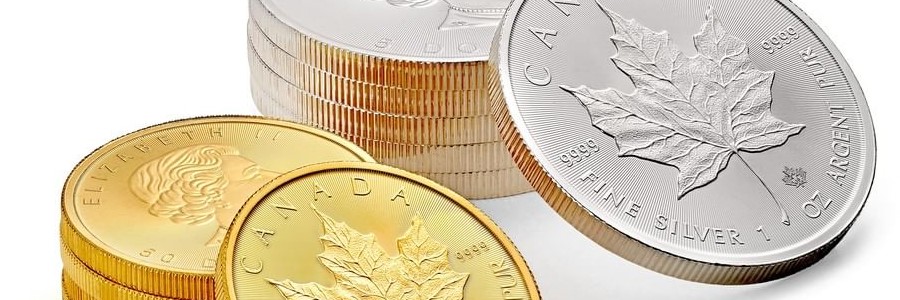
Gold Lower As Bulls Fade

The gold market is lower in late morning trade Friday as a stronger dollar takes a toll. The yellow metal is now near the $1750 level as the bears have distanced the market from the key $1800 mark. The pullback in prices should not come as much of a surprise, however, following gold’s recent upside trajectory.


The battle between key technical levels in gold may continue for the time being. The bears are looking to produce a close below $1700 while the bulls need a close above $1800.  Now right in the middle of these two levels, the yellow metal could remain stuck in neutral for a few weeks until the next FOMC meeting in September.


The path the Fed chooses to take next month may determine gold’s fortunes for the months ahead. The big question is whether the Fed will continue its inflation fight or if it will elect to abandon the inflation battle. Following the latest FOMC meeting, Chairman Jerome Powell seemed to suggest the Fed could decide to pivot away from the inflation fight. His more dovish commentary was seen as being exactly that. Many analysts felt Powell was laying the groundwork for a Fed pivot away from inflation in the months ahead, possibly as soon as next month.


Powell may not decide to give up the inflation battle, however, and could keep the Fed hiking rates aggressively through the rest of the year. Should Powell’s rhetoric sound more hawkish next month, the gold market could potentially struggle. Should Powell sound more dovish, however, it could give gold investors a green light to buy.


While there may be more hope for a dovish Fed next month following the last meeting, the Fed may be unlikely to reverse course at this point. The central bank has previously indicated it believes inflation to be the biggest economic risk and that it does not want to allow price pressures to become entrenched. The Fed seems willing to let the economy enter recession (it it hasn’t already) and appears far more concerned about inflation than a few quarters of slow to zero growth. This could keep the central bank raising rates aggressively through the end of the year and possibly longer.


The gold market could remain sideways until more is known about the Fed’s plans. The $1700 and $1800 levels remain key. Whichever side is violated first, on a closing basis, may indicate how gold could run in the months ahead. As the summer doldrums come to a close in the next few weeks, higher volumes may allow for gold to make a sustainable move higher or lower. Volumes will be back by the time the Fed next meets, and that meeting could dictate gold’s fortunes for the months ahead.

The longer the metal spends between the $1700 and $1800 levels, the more it could potentially move once it breaks out of the recent range. An upside breakout above $1800, for example, could send the market rapidly back to all-time highs or well beyond.

Gold Slightly Higher On Corrective Rebound

The gold market is just slightly higher in early action Thursday as the metal sees a corrective rebound and some short covering. The yellow metal is largely ignoring some stronger-than-expected economic data today and seems to have fully digested the release of the latest Fed meeting minutes yesterday afternoon.


The Fed minutes can be a major economic data piece and have the ability to move markets. Such was not the case yesterday, however, as the minutes did not seem to provide anything new. Deemed to be slightly dovish, the minutes did not seem to provide investors with anything new of substance and were therefore a non-event. More clues about the Fed and its intentions will likely not come now until the next FOMC meeting next month.


Markets will have to monitor the data stream closely and will closely scrutinize any key pieces of economic data. The big question for investors is whether the Fed will elect to remain aggressive and hike rates accordingly. Fed Chairman Jerome Powell seemingly started to pivot away from further rate hikes in his latest commentary. He could be laying the groundwork for the Fed to abandon its inflation fight, knowing that the central bank perhaps does not have the ammunition necessary to put a halt to price pressures.


The notion of higher interest rates had caused stocks to sell off and volatility to rise substantially. The markets have since calmed in recent weeks, however, and stocks may be looking to begin a new bull market after their significant decline in recent months. Recent equity market strength may be weighing on gold, in fact, and could keep investors away from the yellow metal.


Despite stocks’ recent rise, the market does remain vulnerable to another reversal lower. The rally seen in equities is not unusual at all for a bear market. Lower stock markets often see significant rallies before rolling back over again, and the recent equity upside may simply be the latest pop in a market that could be making new lows in the weeks ahead. Should stocks roll over and head lower again, much of that capital could start to find its way into the gold market.


As the summer doldrums wind down over the weeks ahead, the gold market could remain primarily sideways in the absence of further inputs. The key technical levels remain unchanged at $1700 and $1800. Given recent upside momentum, however, a close above the $1800 level could set the stage for a further probe higher. The upside momentum, combined with some solid short covering, could take prices all the way towards the $1900 level in a short period of time. If and when that test takes place, a breakout above $1900 could pave the way for the market to return to previous all-time highs or even well beyond. The market may lack any sustainable moves up or down over the next month or so as the Fed is awaited, however.

Demand Worries Cause Gold To Slip

The gold market is off on Wednesday morning as concerns over demand take a toll. The weaker-than-expected data out of China this week combined with already-robust concerns over a U.S. recession may be more than the gold bulls can bear. Spot prices are slipping again today, down over $10 per ounce in early action. Outside markets are also working against gold today, as the dollar and treasury yields are both moving higher.


Markets are awaiting this afternoon’s release of the latest FOMC meeting minutes. Investors will closely scrutinize the minutes, looking for any clues about the possible timing and degree of further rate hikes from the Fed. The Fed Funds markets are currently pricing in even odds of a 50 or 75-point rate hike in September.


The Fed and its plans may dominate trading headlines in the months ahead. If the Fed maintains its aggressive policy posture, it has the potential to put the U.S. into recession. If the Fed takes a pause or reverses course, however, it could allow inflation to run real hot while possibly keeping stocks and risk assets intact. Many analysts have suggested the Fed could step away from its inflation fight. Fed Chairman Jerome Powell seemingly suggested after the last meeting that the central bank could begin to pivot away from the inflation battle. Seeing as how the Fed may be unable to get inflation under control, this could arguably make some degree of sense.


Others feel the Fed will stay the course, however, and keep hiking interest rates aggressively. The Fed has said it feels inflation to be the worst threat for the economy and that should it become entrenched, it would be even more problematic. The Fed may already be too far behind the curve to affect inflation, however, and may have no choice but to abandon its aggressive rate hikes to prevent a full-blown recession from hitting.


Should the Fed signal it will ditch the inflation war, gold could benefit handsomely. Without the current threat of even higher rates, the opportunity cost argument for lower gold may be gone. Not only that, but without the Fed taking aggressive action, price pressures could become even worse before getting better. Higher inflation could add to gold’s attractiveness as investors look to preserve wealth and protect purchasing power.


The gold market remains stuck in no man’s land for the time being. The bulls need to produce a close above the $1800 level. The bears are targeting a close below the $1700 level. Whichever side of the market produces a close first may win and prices could trend in that direction for some time.


Despite the recent rally by the bulls, the bears are still in control on the daily chart. They may, therefore, have the advantage when push comes to shove. A close above $1800 by the bulls could negate the bearish price action, however, and send gold quickly back to all-time highs or beyond.

Outside Markets Taking A Toll Today

Days after hitting the $1800 level, the gold bulls are still struggling to maintain some upside momentum. Spot gold is down today by a few dollars per ounce as bearish outside market action takes place. The higher dollar and lower crude oil are having a bearish impact on gold as well as stocks hitting multi-month highs in recent action.


Despite gold’s weakness in early action this week, the bulls are still within easy striking distance of the $1800 level. A close above this level could attract a fresh wave of buyers that could take prices higher and do so quickly. A failure at this area once again, however, could be a bearish omen. If the bulls are unable to stabilize things around current levels and force a test of $1800 on a closing basis, the bears may seize further control of the market. The recent uptrend has already been negated, and the bears remain in control on the daily chart.


Concerns about a possible recession remain robust. This week, China released several key data points that were all weaker-than-expected. A miss in real estate, factory output, investment and more has driven the Central Bank of China to lower interest rates to boost the economy. China has the world’s second-largest economy, and if it begins to take an increasingly dovish approach to policy, other nations are likely to listen. The Chinese easing comes at a time when the U.S. and other nations are trying to tighten rates.


It will be several more weeks before markets know if the Chinese easing has influenced the U.S. Federal Reserve. The FOMC meeting will take place next month. The Fed has another month or so worth of data to scrutinize, therefore, and could elect to take a pause or hike rates less aggressively come September. Whatever the Fed decides to do or not do is likely to have a major impact on global financial markets in the months ahead.


As the next Fed meeting is awaited, the battle over inflation rages on. Last week’s CPI and PPI data were both under headline expectations. The weaker headline data does not, however, necessarily point to weakening price pressures. The core rate of inflation remains very, very high. The decline in headline inflation figures may simply be due to the drop in gasoline prices seen in recent weeks.


Inflation may have already become entrenched. If the Fed is unwilling to take rates as high as may be necessary to slow it, the battle over inflation may already be lost. If price pressures are to remain, to some degree, gold and other hard assets could stand to benefit. The long-term bullish case for gold remains unchanged, investors simply need to see the “forest through the trees” to take advantage of what may currently be fire-sale prices in gold. Once the bulls take over, current price levels may never be seen again as the market could quickly race to previous all-time highs or well beyond.

Gold Dips with China Slowdown

The gold market is off to a tough start as the trading week gets underway. The yellow metal is being sold off hard today in early action as some disappointing data from China takes a toll. The recent Chinese data showed weakness in July for real estate, factory output, investment, and more. It has added to already-robust fears of a global recession this year.


The poor Chinese data comes at a tricky time for central banks as well. The Central Bank of China is now going to lower interest rates and boost liquidity to support its weakening economy. This move comes at a time when the U.S. and many other global central banks are trying to raise interest rates to battle inflation.


China is the world’s second-largest economy. Its central bank actions could have a dovish impact on other central banks. The move by China to lower rates could give the U.S. Fed something to think about as its next FOMC meeting approaches. There are still several weeks until the Fed does meet again, and it will therefore also get the opportunity to scrutinize more economic data before making any decisions on rates.


The idea of whether rates rise further from here may become increasingly important as trading volumes return in a few weeks. If the Fed elects to keep up the fight against inflation, it could keep stock investors on the defensive. If the Fed decides to abandon the fight, however, it could encourage buying in stocks and risk assets.


The lowering of rates by China this week may keep the Fed hawks at bay. China is the world’s second-largest economy and thus could have a dovish influence on other global central banks. Whether it keeps the Fed from another aggressive rate hike next month remains unclear, but it will certainly give the Fed something to think about.


The Fed may have already laid the groundwork for pivoting away from the inflation battle. Chairman Jerome Powell said the Fed would rely on the data stream to determine if more rate hikes are appropriate. The Fed seems very unlikely, however, to take rates to where they may need to be to fight inflation effectively. That is why the central bank could elect to let inflation run its course.


If the Fed does decide to put a halt to its inflation battle, stocks and risk assets may see renewed buying interest. The notion of higher rates could disappear and do so quickly if the Fed sends the message it is giving up. Removing the threat of higher rates could dramatically change market dynamics, and gold could possibly benefit as well as the opportunity cost dwindles.


The yellow metal could remain largely sideways in the weeks ahead. Once trading volumes return in early September, however, the market could make a more sustainable run higher or lower. The bulls and bears still have the same initial targets for now: $1700 on the downside and $1800 on the upside. Once either level is broken on a closing basis, the market could continue to run in that direction for the next several months or longer.

Bulls Holding Tight

The gold market is higher in Friday afternoon action as the bulls continue their push towards the $1800 level. The market is now just over this key level, and if it can sustain prices above it could be gearing up for a rapid run higher. The yellow metal is a bit higher from where it began the trading week, although the bulls may need to take a rest sometime in the sessions ahead.


This past week saw several key pieces of economic data. Perhaps most important for the gold market was the Consumer Price Index and Producer Price Index. Both of these indexes showed inflation potentially easing as both came in below market expectations. The miss for both of these data figures could be important down the road. They may give the Fed more to think about when it reconvenes to discuss rates in September. Any further signs between now and then may pressure the Fed to hike less aggressively, to take a pause or to reverse course and lower rates.


The next several weeks will see data closely monitored for further clues about the Fed and what it may do in September. If additional data points to inflation easing, then stocks and risk assets may see further upside. If the data shows inflation remaining near 40-year highs, however, there may be many more unknowns as the next FOMC meeting approaches. These unknowns could fuel market volatility and possibly another large wave of selling in equities and risk assets.


Despite this week’s lower-than-expected inflation data, price pressures do remain quite robust and near four-decade highs. Investors need to look past just a simple drop in the headline figures to look at core inflation data. The core rate, which strips out volatile food and energy costs, remains very high.


The Fed would possibly have to take interest rates much higher to have any significant impact on inflation at these levels. The central bank is unlikely to take rates to Volcker-era levels around 20%, however, and may elect to just give up the fight against inflation in the months ahead. The Fed is currently in a tight corner, as it looks to stabilize prices while avoiding a recession.


The Fed will have to be very careful in the months ahead as it looks to adjust policy. Even a slight misstep by the central bank could put the U.S. into recession or could fuel an extended period of stagflation. The Fed has said, time and time again, that it intends to battle inflation with all of the tools in its arsenal. This could mean that the Fed will stick to its game plan next month and raise rates accordingly.

Markets were expecting another rate hike of 75+points next month before this week. Despite the lower inflation data seen this week, the Fed could still hike by 75-points or could make a smaller hike of 50 or 25-points. A reversal at this time seems very unlikely but is also a possibility.

Tame Inflation Reading Sends Gold Lower

The gold market is higher, albeit not by much, as the markets figure out which way they wanna run in the aftermath of another inflation report that came in not as hot as expected. The lower inflation data may be a positive for risk assets such as stocks, and that may keep some selling pressure on the gold market. The Producer Price Index released this morning showed a decline of .5% and a year-over-year rise of 9.8%. The data is another sign that inflation could have possibly peaked and may give the Federal Reserve something to think about when it meets again next month.


Risk appetite has improved today as the combination of yesterday’s lower CPI figures and today’s PPI data give markets something to consider. If inflation has in fact already peaked, it stands to reason that it could trend lower in the months ahead. This could not only give the Fed reason to consider a pause from its rate hikes, but may also boost stocks and risk assets along the way. Should equity markets react favorably to the data, it could make it more challenging for gold to gain upside traction.


The dollar is weaker following the inflation data today and yields are steady. These have both posed serious roadblocks to higher gold in previous months and may continue to do so unless current trends are reversed. The dollar has been riding high on the notion of higher interest rates and an aggressive Fed. Should the central bank decide to take a pause, however, or if it elected to reverse course and start easing, the dollar could see much of its hot air let out rapidly. Dollar weakness may also affect yields, and yields could potentially decline alongside the currency.


A declining dollar and lower yields could pave the way for a sustainable run higher in gold. Until such time as those occur, however, the bulls may remain stymied in the face of an aggressive Fed, higher rates and other geopolitical factors. The gold market may have a tough time moving higher at this point regardless of whether inflation is rising or easing. The bulls will need to produce a close above the $1800 level to get things going.


The market is well within striking distance of the $1800 level and such a test could be seen today or in the next few sessions. Should the bulls take this level out, it may attract a fresh wave of buyers that could propel the metal higher and do so quickly. This could even put the $1900 area within reach. A test of $1900 could be key, as a close above it could set the stage for a rally that could run all of the way back towards previous all-time highs.


With several weeks until the next FOMC meeting, the markets will have to weigh the data stream and consider the Fed’s options. Markets were expecting another 75-point rate hike coming into today. That forecast may have changed, however, in light of the less inflationary data released this morning.

Don’t Get Too Excited Yet

The gold market has had a ride this morning as the latest data for the Consumer Price Index was released. According to the U.S. Department of Labor, the headline inflation rate declined from the previous month. July registered a reading of 8.5% versus estimates looking for a rise of 8.7%. On a monthly basis, the core reading was unchanged, however, and may have been higher if not for the recent decline in gasoline prices.


Core inflation rose 5.9% on a year-over-year basis and was in line with the same increase seen in June. Core inflation was slightly below estimates, however, on both a year-over-year basis as well as a monthly basis. The monthly advance of .3% was below estimates and may give the policy doves something to consider.


In the immediate aftermath of the data release, gold prices shot higher to nearly $1825 per ounce. They have since cooled rapidly, however, and presently sit around the $1795 area as of this writing.


While the headline figure was lower than expected, it was not low enough to force the Fed to rethink its position. A rise of 8.5% year-over-year is still a major rise in price pressures. The core rate was also very high on a year-over-year basis, and may also not provide the Fed with anything new worth consideration. In fact, the Fed would almost certainly stick with its plans for aggressive tightening if it had to make the choice today.


In order for the Fed to rethink its plans or adjust them, inflation will have to show beyond a doubt that it has already peaked. While some indications point to that having occurred, such as weaker commodity prices and weaker data, the figures have not been enough to warrant a change from the Fed. Inflation is still running very hot and near 40-year highs. Until it lets up considerably, the Fed is likely to stick to its plans for aggressive hikes regardless of the damage caused to the economy.


Because the FOMC does not meet this month, the markets will have several more weeks of data to scrutinize before the Fed meets again. A lot can change in a few weeks’ time, although this era of inflation may take substantially longer to cool down. Today’s CPI data, and more data like it, could give the Fed reason to take a pause, however, and allow some time for their recent rate hikes to work their way through the economy.


If the data stream shows strength in the weeks ahead or if it shows inflation lingering near 40-year highs, the Fed may see no choice but to hike rates aggressively in September and beyond. Expectations are currently for a 75-point hike in September from the Fed, although it could elect to raise rates more or less than that.


The gold market may find itself moving sideways in the weeks to come as it awaits new inputs and more clues from the Fed about policy. The capitulation trade for gold may be yet to arrive, thus longs should be careful for the time being.

Markets Quiet As Inflation Data Awaited

The gold market is a bit quiet Tuesday as investors await some key inflation data due out this week. On Wednesday, markets will get the latest reading on the Consumer Price Index, or CPI. Thursday will feature the latest reading of the Producer Price Index, or PPI. The CPI data is expected to register a reading of 8.7%, following last month’s rise of 9.1%. PPI is expected to come in up .2% from its June reading.


The inflation data for release this week could be market-moving. It also has the potential of changing the Fed’s thinking over the next several weeks. Should the data come in as or hotter-than-expected, it could give the Fed a green light towards raising rates aggressively further in the months ahead. Should the data miss or come in lighter-than-expected, however, it has the potential of leading the Fed to the conclusion that it can afford to take a wait-and-see approach in the coming months.


With no FOMC meeting taking place in August, markets will have to await the September meeting for any decisions on rates. That extra time provides an ample opportunity for the Fed to closely examine the data stream and determine if it really needs to continue hiking at the pace it has already set. Markets are currently expecting another 75-point hike next month. Should the data stream soften, however, or should the inflation data point to a possible peak having already been reached, then the Fed may opt to consider taking a less aggressive approach. This could mean a smaller hike next month of 50 or even 25-points or even no hike at all.


In his latest commentary, Fed Chairman Jerome Powell seemingly suggested the Fed could pivot away from inflation fighting. While not overly dovish, his remarks did not strike the same hawkish chord of previous commentary. That led many to assume that Powell was laying the groundwork for the Fed to move away from inflation fighting and possibly start worrying more about the economy. The economy has slowed, although much of the data, including last week’s jobs data, remains quite strong.


The Fed may now find itself in a challenging conundrum. The central bank is way behind the inflation curve already. Regardless of whether it keeps hiking rates or not, the Fed is unlikely to catch inflation or even put a major dent in it without taking rates to Volcker-era levels around 20%. This is extremely unlikely, and the Fed may therefore elect to abandon its fight against inflation.


More may be known about the Fed’s plans next month as the FOMC meeting takes place. If the Fed does decide to pause its rate hikes or even reverse course and start easing again, markets may become confused. This could lead to a spike in volatility and widespread selling across asset classes. Gold may stand to benefit, however, as the opportunity cost would not be rising and could possibly even decline.

Bulls Start The Week Off On Right Foot

The gold market is off to a strong start as the new trading week gets underway. Spot gold is higher by over $11 per ounce in early afternoon action. The bulls are within striking distance of the $1800 level and could challenge the area sometime this week. Dollar weakness and declining yields are the primary reasons for gold’s strength today.


Investors will be focusing their attention this week on corporate earnings. The markets are in the middle of the summer doldrums, and lower trading volumes could fuel some volatility in the weeks ahead. Volumes may remain light until traders return from the Labor Day Holiday in early September.


The data stream will be watched carefully by markets over the next several weeks. There is no FOMC meeting in August. The group will meet again in September to determine any changes to monetary policy. The Fed has said it would rely on the data between now and then to determine if it will hike rates again. Following last week’s hot jobs data, the Fed may now not see any reason to pause or start easing but may stick to its plans of fighting inflation and raising rates aggressively to do so.


Any key data that misses the mark in the coming weeks may be viewed as something for the Fed to think about. Stronger-than-expected data may have the opposite effect, and could fuel the idea the Fed will raise rates by another 75 or more points. For the time being, markets are expecting another large rate hike from the Fed.


In recent commentary, however, Fed Chairman Jerome Powell seemingly suggested the Fed may step away from inflation fighting. He seemed to convey the idea that the Fed may take a wait-and-see approach to policy and could allow some time to pass by before hiking any further. Powell’s comments were before the recent non-farm payrolls data, however, and may no longer make much sense in light of the jobs data.


The debate over what the Fed may or may not do is likely to rage until the September FOMC meeting. The notion of an aggressively and hawkish Fed versus a more dovish Fed may keep gold on the move in the weeks ahead. Should the data stream show strength, it may keep a lid on any gold upside. Should the data stream soften, however, it could keep the gold bulls in business, pushing prices higher in the process.


Soft data may also fuel the current recession fears. Worries over a Fed-induced recession may increase if the data starts to show weakness. These concerns could fuel some safe haven buying in gold and could keep the market on the offensive. Should the economy enter a recession, it could give the Fed reason to pause and possibly even start easing interest rates. The idea of the Fed shifting its stance on policy may keep the gold bulls motivated. A close above the $1800 level may encourage more bulls to enter the market.