Gold Down On Profit Taking, Chart Consolidation

The gold market is down sharply in early action Monday. Spot prices are down about $23 per ounce in the early going as some investors book profits following gold’s recent run higher. The chart consolidation being seen this morning is not only completely normal but may also be necessary before the metal can sustain another leg higher. The market has lost the $2,000 level this far, however, it could prove to make things more challenging for the bulls.


Key outside markets today are seeing the Dollar Index firmer. Crude oil prices are steady at just under $81 per barrel and the 10-year Treasury is yielding 3.383%. The only market possibly having an impact on gold today is the dollar. The currency may see renewed pressure in the coming days and weeks, however, if talk about China and other nations moving away from it continues.


Although many investors likely took Friday off for the Easter Holiday Weekend, the markets did get the latest release on non-farm payroll data. It showed a rise of 236,000 jobs versus the February gain of 311,000 jobs. The gain on Friday still falls into the camp of the policy hawks, however, and could give the Fed more reason to consider hiking rates even further.


The market may be fairly quiet until the major data point of the week on Wednesday. That day will bring the release of the latest Consumer Price Index (CPI). for March. It is expected to show a rise of 5.1% versus a rise of 6.0% for February. A big miss in this report Wednesday could be market moving. If inflation is hotter than expected, it may reinforce the notion that the Fed has more work to do on rates and that rates will be moving higher yet. If the data shows slower-than-expected inflation, it may boost hopes for the Fed being done or even reversing course on interest rates sooner rather than later.


As worries over a recession increase, inflation and other data become even more important. The data stream will be closely scrutinized by the investing public in the months to come. Better-than-expected data may no longer be viewed as being hawkish, and markets may celebrate good news as being actually “good news.” Major misses in the data may pose a greater risk of recession, however, and could give investors reason to flee stocks and risk assets. Of course, there are also geopolitical risks being seen around the world now also.

Will The Gold Breakout Hold?

The past week has seen the price of gold break out above the $2,000 level. The question many have now is whether it will stay there. The yellow metal is down today, but it is still maintaining trade above the $2,000 level. The latest U.S. labor market data in Weekly Jobless Claims today has not done much to move the market. It has caused some concern about the labor market, however, as jobless claims are on the rise.


A softening of U.S. labor data may point toward a recession on the horizon. The term “recession” has been thrown about quite a bit in recent months, but has thus far failed to materialize. If more people are out of work and having trouble finding a new job, the odds of a recession would rise and could climb substantially.


If the chances of a recession do rise, the Federal Reserve may find itself in a tough situation. The Fed has already raised interest rates to nearly 5%. Whether the Fed can keep going, however, is another matter. The higher interest rates are having an effect on the economy and will continue to slow it down further, especially if rates go even higher from current levels. The real issue at hand for gold investors is not how high rates might get, but how costly it becomes to service the nation’s debt.


The $32 trillion and change in national debt is sitting in the stomach of lawmakers like a stack of rich pancakes. Although it has always been easier to kick the can down the road, the time for doing so may be running short. At some point, as the cost to service that debt becomes more unmanageable, the U.S. will be forced to do something. A logical solution for lawmakers could be to debase the dollar or even get rid of it entirely.


A massive currency debasement would not only affect the government and its debt load but would also have a dramatic and negative impact on U.S. households. Should the value of the currency decline from current levels, the value of gold is likely to go higher. Gold could reach over $3,000 in a few short weeks if the dollar begins to seize up.


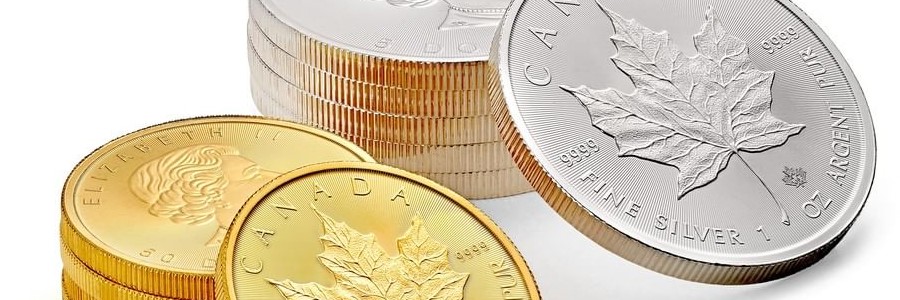
The gold market is now within striking distance of its previous all-time highs. If the dollar is debased or weakened, gold could rally and see fresh all-time highs within a matter of days. As the cost of U.S. debt rises further, so too will the price of gold in all likelihood. If you do not already own physical gold, now is the time to get started. Building a portfolio of gold has never been easier and can even be done within an IRA account. Get your gold before prices climb further. When the yellow metal hits $5,000 or even $10,000 per ounce, you will be glad you did.

Bulls Taking A Break Today

The gold market is a bit lower in mid-morning action Friday. The spot price is down by $3 per ounce in quiet trade thus far. Despite the day’s declines, however, the market remains very close to the $2000 mark and will likely test this area early next week. The combination of an increasingly dovish Fed and bank worries may keep gold well supported in the weeks ahead.


Recent economic data has also been bullish for the yellow metal. Durable Goods Orders, released earlier today, showed a decline for the fourth consecutive month. As weakness in the manufacturing sector gains steam, more investors may become worried over the possibility of a recession coming. Not only that, but a slowing economy may also mean that the Fed is at or very close to the end of its tightening cycle. The Fed did raise interest rates again this week by 25 basis points, as expected, but also signaled it would not be hiking rates again any time soon.


The end of the current rate hiking cycle may not only provide investors a sense of relief, but it may also give them a degree of clarity that had been lacking for some time. This clarity may allow investors to make moves they otherwise would not and could put gold and other markets onto sustainable trajectories for the months ahead. If the Fed were to signal that they may see the need to start cutting rates again, look out. Gold and stocks could see a significant upside while the dollar gets clobbered. Whatever the case may be, the Fed and its plans for rates could hold the keys to higher gold and higher equities. For the time being, the $2000 level will act as an important resistance barrier for gold.


If the gold bulls can take out the $2000 level on a closing basis, the stage could be set for a rapid rally higher that could see gold back at all-time highs in a short period. If the bulls fail to take out this level, however, the bears could gather some strength and potentially drive the market lower to the $1900 level. The bears will not have anything of substance going until they take out $1800 on a closing basis. Within the market not far from previous all-time highs at this point, logic could suggest that a test of those highs may be seen before any significant downside is. Whatever downside does come along may not be enough to deter the bulls from taking the market higher over time. Any significant dips are likely to be bought aggressively, for the time being, and this may keep the metal from falling too far too fast.


The next several sessions may be critical for gold as it attacks the $2000 level. Given the current backdrop, however, the market could find reason to move higher and do so quickly if another bank runs into trouble or signs of contagion appear.

Gold Losing Ground Monday as Powell, Jobs Data Awaited

The gold market is lower in early afternoon action Monday. With two key pieces of economic data set for release this week, the market was comfortable treading water for much of the day. Prices have slipped in recent hours, however, and spot gold is now down by over $11 per ounce.


Fed Chairman Jerome Powell is set to speak before Senate and House Committees tomorrow and Wednesday. His testimony on monetary policy could provide further clues about the Fed’s plans going forward and its economic outlook. Whether the Fed will continue raising interest rates, and if so by how much, is the topic of much debate in financial circles. Any strong clues provided by Powell over the next two days could be market-moving.


In addition to Powell’s testimony, the markets are also awaiting the jobs report set for release Friday. Non-farm payrolls are expected to show a rise of 225,000 jobs following the massive rise of over 500,000 for January. If the data sees a large miss to the downside, it could move markets as the doves start to buy based on hopes for a less-hawkish Fed. If the jobs data is a strong beat, it could have the opposite effect. A stringer-than-expected jobs figure could send the markets lower as worries over an aggressive Fed take hold. A number that is in line with expectations is unlikely to move markets much, if at all, and may give investors reason to stay patient and wait for the Fed’s next meeting on rates.

The gold market appears to be in a bit of a holding pattern right now. Since the bulls lost the $1900 level a few weeks ago, the metal has not made any major moves up or down. If the bulls were to lose the $1800 level, the trajectory of the market could change drastically. For the time being, both the bulls and the bears appear to be somewhat comfortable with prices in the mid-1800s.


With 2023 now well underway, the markets will want to see clear action and intention from the Fed. Recent inflation data has had some ups and downs, and the picture regarding price pressures is not completely clear. Investors will want to see more clarity on inflation and the Fed’s plans before making any big bets. This could happen quickly but will more than likely take some significant time. The gold market could be likely to remain range bound until more clarity is seen. This could leave the metal vulnerable to a sizable sell-off as frustrated bulls leave the party. Any significant sell-offs are likely to be met with aggressive buyers, however, as long-term players look to get their gold on sale.


For the time being, the $1800 level and the $1900 level are key. If the bears can take out the $1800 level on a closing basis, more downside could be in the cards. If the bulls can retake the $1900 level on a closing basis, more upside may follow.

Fed Minutes On Deck

The gold market is slightly higher in early action Wednesday as investors await the release of the latest FOMC meeting minutes this afternoon. While there is no guarantee that the minutes will move markets, past meeting minutes have done exactly that and today’s have the potential to do so as well. The Fed has stuck to its plans for higher interest rates for some time now, and with inflation still being problematic there is little reason to think the central bank would now decide to steer away from more rate increases.


The Fed’s previous rate hikes are having an impact. The effects of higher rates may be seen in recent inflation data, much of which has shown a slight easing of price pressures in recent months. While the Fed still has significant work to do, it does appear to be moving the needle in the right direction. A hawkish-sounding Fed today could set off some alarm bells while a more dovish-sounding Fed could fuel a rally in stocks and risk assets. The gold market could also benefit from a dovish Fed but it could also even find a way to rally if the Fed is more hawkish.


The gold bulls and bears are locked in a tight battle currently. The market is in a weak trend lower, giving the bears a slight advantage. The bulls need to take the metal back above the $1900 level and then challenge the $1950 area. The bears will look to take the market down to $1800 and if successful will then look for a challenge of the $1700 level. Until the bulls or the bears establish control of the market, more sideways price action may be seen.


In outside market action, the dollar is slightly lower today but may not stay that way if the Fed signals more rate hikes to come. The dollar has been a major obstacle for the gold bulls in recent months and any further strength in the dollar may keep the bulls from extending the rally. The higher the dollar goes, however, the harder it may eventually fall. If more counties look to dump dollars in the years ahead, the greenback could be hit by a tidal wave of selling that could take it sharply lower from recent levels. If such a scenario were to develop, the gold market could see a substantial upside as the dollar sees a significant downside.


Recent stronger-than-expected data may be soothing recession fears currently. It is not soothing to those concerned about higher interest rates, however, and the Fed may decide to keep rates higher for longer as it suggested previously. This theme is likely to be a major market catalyst for the months ahead and could set the stage for either a significant rally in the price of gold or a significant and sharp downturn in the price of the metal. Both camps are prepared for whichever materializes and it may now just be a game of waiting until it does.

Gold Higher As Markets Await Powell Speech

After starting the day a little stronger, the gold market has gained momentum. Gold is now higher by nearly $10 per ounce as markets await a speech by Fed Chairman Jerome Powell at mid-day. The Powell speech is taking place today at an economic club in Washington, D.C., and could provide some clarity on the Fed’s thoughts following a much stronger-than-expected jobs report last week. That jobs data could force the Fed to remain hawkish even as markets are now expecting more dovishness from the central bank. Markets may have misread Powell last week, focusing their attention on his disinflation remarks and not his talk of more work needing to be done.


Regardless of what Powell may say today; the markets will remain focused on the Fed for the months ahead. The Fed has toned down its pace of rate hikes, raising rates by just 25 basis points last week rather than 50 or 75. The Fed could pick up the pace of rate hikes if it feels it to be necessary, however, while it could also elect to pause or even stop hiking rates altogether if it thinks the job has been completed. Recent inflation data has pointed to a slowdown in price pressures. Whether that slowdown is enough to modify the Fed’s thinking is another matter entirely and may be debated as 2023 gets rolling. The Fed has previously suggested rates may need to remain higher for longer, and for the time being there has been nothing to suggest it has changed its mind about that.


The gold bulls have done a good job thus far of keeping prices elevated. The bulls did lose the $1900 level recently, however, but the bears have been unable to follow through so far. With spot gold at $1876 today, the bulls remain well within striking distance of the $1900 level. The bears have their work cut out for them. The bears first must produce a close below the $1800 level. If able to do so, the bears would then likely look for a challenge of the $1700 area or the original upside breakout point from several weeks ago. The bears have a lot of room to cover to get anything significant going to the downside, and if they are unable to do so the bulls are likely to remain in firm control of the market.


The gold market may also find itself maintaining a trading range again, albeit a higher range. The bulls seemingly have reason to take the market higher, but they could take their time doing so. A significant pullback, in fact, may not only be necessary for the market to sustain higher levels but also healthy. Any sharp declines in gold are likely to be bought aggressively. For the time being; the bulls remain in control of the market and the trend is still higher.

Bulls Buying The Dips

The gold market is higher in mid-day trade Tuesday as investors position themselves ahead of tomorrow’s FOMC meeting announcement on rates. Bulls stepped into the market earlier in the session to buy the dip seen Tuesday morning, and the market is now higher by nearly $7 per ounce as the pit session prepares to close. Trading has been somewhat muted across markets this week as investors prepare for tomorrow’s FOMC announcement and press conference. Expectations are for the Fed to raise rates by 25 basis points rather than the previous 50 or 75 points.


The Fed announcement on rates could be market-moving tomorrow. The 25-point hike is likely to do little to move markets, but the Fed’s commentary afterward could be very telling about its plans moving forward. If the Fed is seen as being more dovish, it could potentially send gold and stocks higher as hopes for a reversal on rates may increase. If the Fed is viewed as being more hawkish, however, the markets could be sold off heavily. Fed Chairman Jerome Powell is likely going to be very careful in what he says and how he says it tomorrow, and the markets could potentially come away with nothing new to go on.


The Fed’s plans are certainly a major factor for gold in the months ahead, but they are not the only factor. The war in Ukraine, the potential for a Chinese invasion of Taiwan, the dollar, and other factors may all play a role in how gold performs in the months ahead. Even with a more hawkish-sounding Fed, the gold market may see a quick rebound from any selling as investors look to buy the dips. The upcoming U.S. Presidential election may also play a role for gold as the election gets closer.


For the time being, the bulls will have to buy based on what they already know. The bulls have thus far done a good job of holding the market above the $1900 level. The next major bullish target is well within striking distance at this point, with the $1950 area only about $20 away. If the bulls can produce a close above $1950, the market could be poised to attempt previous all-time highs. If the Fed were to signal a course reversal on rates later this year, the gold bulls could not only rapidly reach previous all-time highs but could start making new all-time highs in the process. A dovish signal from the Fed could not only suggest a move towards previous all-time highs but could make $2500 or $3000 per ounce gold a reality in the months ahead.


The bears have their work cut out for them. They must first produce a close below $1900, followed by a close below $1800. The real test for the bears would likely not come unless the market were to test the upside breakout point around $1700. A close below that could send the market sharply lower, with little in the way of support until the $1500 level is reached.

Gold Sitting Tight Ahead Of FOMC

The gold market is sitting tight ahead of the upcoming FOMC meeting announcement this week. The Fed meeting begins Tuesday and concludes Wednesday afternoon. It is widely expected that the Fed will raise rates again, although by just 25 basis points this time around. Trading in gold and other markets may be more dull and light this week as the markets await the Fed’s decision and the Jerome Powell press conference after. Both gold and stocks are seeing slight corrective pullbacks Monday, with gold down a few dollars per ounce and stocks modestly lower in early afternoon action. The trends in both markets remain higher, however, and today’s dips could prove to be bought as the day progresses.


In the biggest data point of the week, the Fed’s commentary will likely be far more important than the decision to hike rates by 25 points. It is currently expected that the Fed will continue to raise rates through the first half of the year. Despite some recent inflation data pieces showing inflation is starting to moderate, the Fed will want to make sure the job is done before it begins cutting rates again. What that might mean specifically is anyone’s guess, but it seems unlikely the Fed will begin easing rates until the second half of the year or sometime next year. Markets may know and understand this already but are eagerly awaiting the signal from the Fed that easing is on the way. Once the Fed provides that signal, it could provide the gold bulls with a green light to take prices even higher, possibly into the new all-time high territory.


If the Fed hikes by 25 points this week, it is unlikely to have a major impact on markets. If the Fed does not hike rates or hikes by more than 25 points, then things could get interesting. A stronger rate hike could signal to markets that the Fed is still very concerned about inflation. This could lead to selling across asset classes, with both stocks and gold potentially being hit hard. If the Fed decides not to raise rates this week, it could signal a more dovish line of thinking by the central bank. This could provide the gold and stock markets with some bullish activity that could see prices rise substantially.


The next several months will likely bring more of the same. The markets are awaiting further clarity from the Fed, but the Fed may not provide enough clarity until it signals a policy change. While such a change could come at any time, it is unlikely to arrive in the next few months and would almost certainly come in the second half of the year. In the meantime, the bulls will try to avoid a close below the $1900 level while the bears will look to produce one. The next upside target for the bulls is $1950 on a closing basis.

Patience Required

There seems to be an increasing amount of talk regarding gold and its ability to return to all-time highs. The yellow metal has had a strong run over the last several weeks and is up over $300 per ounce since November. The reasoning behind gold’s strong performance seems clear enough and many investors feel it is likely to make another critical jump in the weeks ahead. The metal has already taken the $1900 level on a closing basis and thus far has been able to hold this level on the chart. Markets do not typically go straight up or straight down, however, and the gold market is no different. The metal may need to see a significant pullback before the bulls can take prices sustainably higher. When such a pullback could occur is anyone’s guess. Given the recent upside in the market, however, now or very soon seems to make a great deal of sense.


Many investors have missed the gold rally in recent weeks. The metal spent months in a tight trading range before finally breaking out at the $1700 level. What is to say that the metal could not spend another several month’s trading sideways, only in a higher range? The answer to that question is nothing. The markets are awaiting the Federal Reserve’s decision on rates next week before making any big moves. The decision on rates isn’t even the most important thing. What is important is what the Fed says about its plans going forward. The central bank does not want to overtighten and be forced to begin easing again too soon. The Fed is likely, therefore, to take its time rising rates to the desired level in the first half of the year. This fits into the Fed’s plans to leave rates higher for longer.


Although the Fed is unlikely to provide any clues about its easing plans, it is likely to signal a move towards easing possibly in the second half of the year. Inflation data has been coming down, and although it is still very elevated, it is moving in the right direction. This would seem to suggest that the Fed’s actions are working. Now forced to walk a tightrope, however, the Fed will look to be especially careful as it implements its desired policy. That caution could be reflected in the central bank’s commentary over the next few months as it may look to provide little if any, useful information for investors.


The market may remain range bound until more clarity is seen from the Fed. The bulls need to produce a close above resistance at the $1950 level. The bears are looking to produce a close first below the $1900 level and then at the $1800 level. The metal could pull back to the $1800 level before finding more solid ground on which to rally. Patient, long-term investors understand this and may be willing to step in and buy the market on any significant dips. “Good things come to those who wait,” is an important saying for gold investors and could prove to be very true for the bulls.

Gold Lower On Profit Taking And Higher Dollar Yields

The gold market is seeing some moderate selling pressure Thursday as spot prices are down nearly $17 per ounce in early afternoon action. In addition to rising yields and a stronger dollar today, the gold market is also likely being sold off on some better-then-expected economic data released this morning that falls firmly into the hawkish policy camp.


The biggest data point of the day was the advance estimate of fourth-quarter GDP. The GDP reading was up by 2.9%, slightly higher than market expectations for a rise of 2.8% year-over-year. The figure was a bit softer compared to Q3 GDP data, which saw a rise of 3.2%. Other data released Thursday was also upbeat and could increase expectations for the Fed to remain more on the aggressive side when it comes to policy. The next FOMC meeting is taking place next week, and current expectations are for the central bank to raise rates again, although by 25 points this time around. A 25 point hike will show the Fed’s willingness to keep taking rates higher, but also shows their acknowledgement of what raising too rapidly could do to the economy. Concerns over a recession this year have already increased substantially and could rise further if the Fed keeps trying to put on the brakes.


The threat of a recession in 2023 may be the primary driver for gold in the year ahead. The Fed knows it has to walk a fine line, and the slightest misstep by the central bank could allow inflation to run rampant for longer or could send the economy straight into a major recession. Fears over a recession may keep the Fed a bit more flexible when it comes to raising rates, and the Fed may look to take longer to get the terminal rate to the desired level. Of course, further data pointing to a slowdown in inflation could give the Fed reason to pause. While a pause by the Fed may be a distinct possibility, a reversal by the Fed seems unlikely at this point. Yes, inflationary data has come down a bit. Inflation still remains far too high, however, for the Fed to start easing rates in good conscience. Sometime during the second half of the year, the Fed could potentially signal towards a timeline for easing. Easing is unlikely to begin anytime this year, however, and would most likely not be seen until early 2024 at the soonest.


The path of least resistance in gold may remain higher as long as easing is expected at some point down the road. The bulls have been able to maintain the market above $1900 for several days now, and the longer they do so the tougher any downside may become for the bears. The bears will first look to produce a close below the $1900 level while the bulls will target a close above $1950.