Strong Start

The trading week has gotten off to a strong start for equity investors. On Monday, the benchmark Dow Jones Industrial Average gained nearly 700 points for a gain of over 3% for the day. The question many investors may now be asking is whether recent gains might last.


As the world continues to deal with the coronavirus pandemic, the total amount of infections continues to rise. It is estimated by many analysts, in fact, that infections may not peek for several weeks still. U.S. President Trump even recently reversed course, ordering the shutdown to continue to April 30th. Trump had recently voiced his desire for the country to reopen by Easter.


Many companies announced employee furloughs today in a move that was not unexpected. How many of these companies might survive the pandemic remains a larger question, as many of them may not be able to last much longer.


On Friday, the U.S. Government passed legislation aimed at combatting the coronavirus crisis. The government passed a $2 trillion bill that would put money into the hands of most Americans. This is designed to keep people spending, as the transfer of money may keep the economy above water for a bit longer. Over $150 billion of the bill will go directly into healthcare, finding its way into drugs, equipment and other arenas that desperately need help. The massive stimulus package comes on the heels of the Federal Reserve’s latest action, as the central bank recently took its Fed Funds rate back to zero.


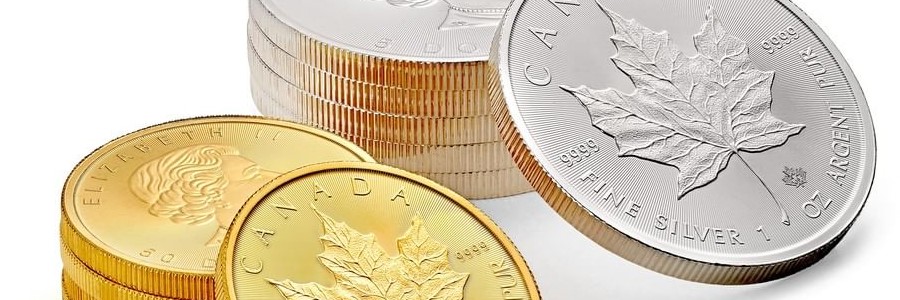
Despite recent actions, however, the stock market may still find a fresh low before a long-term bottom is found. On Monday, the benchmark 10-year treasury note yielded just .64 percent, suggesting that risk aversion is still quite prevalent in the marketplace. This degree of risk aversion could point to still higher gold prices in the weeks and months ahead. The gold market ended lower Monday as stocks roared higher, although the yellow metal was only down a few dollars per ounce, not straying far from recent highs.


Also having a negative impact on gold Monday were a dollar index rally and weaker crude oil. The oil market, which has been on a sharp trajectory lower in recent weeks, sank below the psychologically important $20 per barrel level. Crude is now trading at levels not seen since 2002, and the world is rapidly running out of storage areas for the commodity.


In other news, the Russian Central Bank said it plans to put its gold purchases on hold starting April 1st. The Russians have been a major buyer of gold in recent years, adding to their holdings every month for the last three years. Despite their not purchasing gold, the Russian Central Bank is unlikely to become a seller any time soon. The country is currently engaged in a crude oil price war with Saudi Arabia and in a world of ultra-low interest rates may look to maintain its gold holdings to support the value of its currency.


The next several weeks may see ongoing or even increasing market volatility across asset classes, and the gold market could potentially be en route to a fresh high and even a test of previous all-time highs near $2000 per ounce.

Cluelessness

A reporter on Bloomberg earlier in the week commented that fear was not yet present in the markets. Global stocks have seen enormous selling pressure, but it is not until the hedges and safe-haven assets also trade lower simultaneously that fear is then present. In other words, everything is red. Certainly there may be a degree of subjectivity to that call, but I like the premise.

In this selloff/correction/decline, we witnessed that for the first time on Wednesday the Dow Jones Industrial Average and the TSX officially entered bear market territory (which is a 20% decline from their most recent high). The S&P500 joined them Thursday. On Wednesday, the price of the US 10 Year Treasury was also lower. Whether that’s anomalous or warning it could get worse is to be seen. The most challenging angle to this entire market action though, which is exemplified by the quick and drastic price moves, is deciphering this as a transitory shock or a recession incurring serious economic damage to consumer confidence and employment.

In just a week, consensus shifted to the latter.

I had written a blog last Sunday morning to be sent out at the beginning of the week, but for the above reason the piece was rendered irrelevant by the time the markets opened. The topic was on distinguishing the signals the markets were telling us. Particularly whether the bond market was pricing in rates cuts or a more extreme scenario including recession. The second point was on then being careful with the parallels that were being drawn to 2008. Beyond analyzing the virus impact, there is now an oil supply-shock entering the equation.

Numerous unknowns remain. Front and centre are the potential spread of this virus and the associated impact to economic activity. Trying to determine this almost seems like a rogue’s game at this point. Many of the more opportunistic analysts suggested that this health scare was no less manageable than previous pandemics (from an economic perspective) and the markets would see past it. But, the probabilistic scenarios still seem wide ranging, as illustrated by stock markets struggling to maintain a bid. Factoring in the destabilising effect of the energy shock to the credit markets and the effect on the real economy is whats driving the increasing concerns with recession.

To add to my obsolete (and unpublished) content, one key distinction worth making to 2008 and the Global Financial Crisis is the abandonment of multilateralism. Beyond whatever one’s preferred politics, it seems President Trump’s global led shift to a more unilateral approach seems less effective, or alternatively an audience less receptive. In 2008, it was a coordinated effort between monetary and fiscal stimulus to support the global economy. This last couple weeks has seen a communique from G7 nations that saw central banks follow in an uncoordinated fashion that is yet to see any effect.

The concern is that this deglobalization affect will create more dislocations and more market fragility. Without Western Powers acting in sync, there is the opportunity for more frictions and much more volatility. To illustrate this, Goldman Sachs Wednesday morning suggested the S&P500 could fall another 15%, but then rebound into year end by 30%. Buckle up.

A Long Week Ahead

If market action on Monday is any indication, the trading week could be a long one. As global markets grapple with the rapid spread of the coronavirus, the markets are now being hit with an oil market sell-off the likes of which has not been seen since the Gulf War. After an OPEC deal failure over the weekend, the price of crude oil plunged by up to 30 percent on Monday as nervous investors hit the sell button.


The situation in oil began to develop last week. As OPEC looked to its allies to strike a deal on production cuts, Russia declined to accept a deal. This, in turn, likely caused Saudi Arabia to slash the price it charges for its oil as it looks to increase production. On Saturday, the Kingdom announced significant discounts on April selling prices. The Kingdom also is reportedly looking to ramp up production to over 10 million barrels per day, from its current production level of 9.7 million barrels per day. Some analysts have suggested that the Saudi Arabian/Russian price war began this weekend as Saudi Arabia initiated the largest price cut in over two decades.


The oil price war does not come at a good time for the market. Crude oil has already been under selling pressure as the coronavirus spreads and becomes an increasingly significant focal point for global markets. Adding insult to injury, not only was a production cut agreement not reached going forward, but current cuts are set to expire at the end of the month with no direction going forward. Exporters may, therefore, be able to decide how much oil they pump.


The oil price war, combined with concerns over coronavirus, has sent stocks sharply lower Monday. The benchmark Dow Jones Industrial Average has been down over 2000 points at the lows of the day, while all U.S. Treasury yield are now below 1 percent.


After trading over $30 per ounce higher in action last night following the market’s open, the price of gold has settled back down. The yellow metal is trading $1.70 higher in early afternoon action. The rise and subsequent decline of gold in recent hours may be attributed to concerns over the health of the Chinese economy, the globe’s second largest. The yellow metal may also find willing sellers as the need to raise cash increases due to market volatility and margin calls.


The decline in global equity markets could have a way to go. Although central banks stand ready to cut rates further or to implement other measures such as QE, the risks of an oil price war and the coronavirus cannot be overstated. U.S. equity markets are in correction territory already, and a rapid move towards bear market territory could be seen in the days and weeks ahead. Monday marks the 11th anniversary of the U.S. stock bull market, yet many are now questioning whether the run higher is over.


The gold market, on the other hand, could be at the beginning stages of a bull market that could last for years. Despite the metal’s reversal from overnight highs, gold could stand to benefit if stocks move lower and risk aversion rises further.

A Fed Suprise

The global coronavirus has continued to spread, and to spread rapidly. New cases in Italy, Iran and the U.S. have recently fueled a large degree of risk aversion that drove stocks to their worst weekly performance last week since the 2008 financial crisis. This week got off to a much better start, however, as the benchmark Dow Jones Industrial Average rose by over 1200 points Monday.


On Tuesday, the U.S. Fed took markets by surprise, cutting the key interest rate by a half percentage point in between policy meetings. The Fed cut comes on the heels of a cut by the Central Bank of Australia, which took its key interest rate to an all-time low of .5 percent. The Aussie central bank took the step in order to combat the increasing global economic slowdown from the coronavirus, with more central banks likely to follow suit in the days and weeks ahead.


The U.S. Fed acted aggressively by cutting rates a full half-point rather than a quarter-point. This move initially fueled higher stock prices. Those highs didn’t last long, however, and equity markets are now sharply lower in mid-day trade. The benchmark Dow Jones is now down nearly 450 points on the session for a decline of 1.67 percent. The Fed’s actions, while intended to boost the economy and to soothe investors, could end up having the opposite effect. The fact that the central bank felt the need to act, and to do so now, could give investors the sense that the Fed felt it couldn’t afford to wait. The stock market reaction is thus far bearish, and more selling could be seen before a bottom for stocks is finally found.


The gold market, on the other hand, is taking the news with a bullish sense of optimism. The yellow metal is now up over $55 per ounce on the day as the market has effectively erased all of Friday’s declines. The metal is now approaching the $1700 level, and if reached, the next major move higher could see a test of previous all-time highs around $2000 per ounce.


In another potential sign of economic distress, the benchmark 10-year note yield hit a fresh all-time low today of 1.023 percent. The extremely low yield would seem to suggest that investors are more concerned about safety than returns and are willing to park cash for a very paltry return in order to keep it safe.


Also assisting gold today is higher crude oil prices and a weaker dollar index. Crude oil has moved up towards the $47 region, while the dollar index is now trading at a multi-week low. Weaker stocks, along with a declining dollar, could hold the keys to fresh all-time highs in gold in the weeks and months ahead. The ongoing string of easing central banks may also provide some additional lift for the yellow metal as well and increasing risk aversion could keep a strong bid in the gold market for the foreseeable future.