Should I Buy Gold Bars Or Coins?

Once you have made the decision to invest in physical gold, the next question often asked is whether you should buy gold coins, gold bars, or a combination of both. Although there is no simple right or wrong answer to this question, the type of gold you buy should be determined by your investment objectives, liquidity needs and risk tolerance.


Investors simply looking to acquire as many total ounces of gold as possible may prefer to stick to bullion bars. Gold bars can oftentimes carry the smallest over spot premiums and may, therefore, allow the buyer to acquire more total gold for the price. With newer fractional gold bars, investors no longer need to purchase one or more ounces at a time. These smaller bars are sized in fractions of an ounce and can, therefore, allow the investor to purchase a half ounce, quarter ounce or even smaller size switch as 1/10th ounce. As the price of gold again approaches the $2000 level, fractional gold bars may be a great choice for investors on a budget or with limited funds to invest.


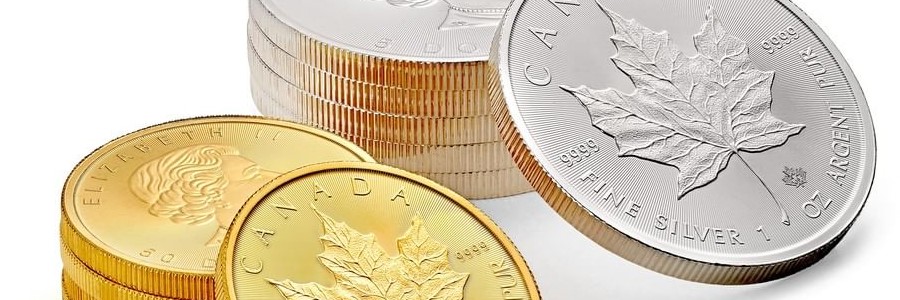
Gold coins can also be a great investment. Coin values can vary wildly, however, based on several key factors. A highly liquid gold coin, such as the American Gold Eagle one ounce coin, may not carry a significant dealer premium. A rare gold coin, on the other hand, could carry a premium that exceeds the value of the metal it contains. Investors interested in buying and holding physical gold may want to avoid such coins, therefore, as more of their investment dollars would go towards collectibility value than to actual gold. Gold coins do also have a face value and may be good, legal tender. That face value, however, is not where the coin’s value comes from. The coin is still valued primarily on its gold content.


Whether you should buy gold bars or gold coins depends on your objectives. If your goal is to get as much physical gold as you can afford, then bars or coins with the smallest premiums are your best bet. If you are looking for products that also have collectibility value attached, then coins may be the better option. In our experience, however, coin collecting is best left to professional collectors. This is because gold coin collectibility values can fluctuate significantly, meaning you can lose a lot of money on them even if the price of gold rises.


Figuring out whether you should buy gold coins or gold bars is simple if you ask the right questions. These may include: What am I trying to accomplish by purchasing gold? Am I on

a limited budget-what can I afford to spend on gold? Do I know and understand collectable coins and how they are valued? Will I need to sell any of the gold in the near or intermediate term?


As with any other type of investment, spending some time upfront to consider your goals, risk tolerance, liquidity needs and other factors can go a long way towards helping you make the right decisions.
The Market May Now Be Off To The Races

Following strong gains seen in yesterday;s session, the gold bulls exhibited some follow through today. Not only did the price of gold rise further but the bulls were able to take out key resistance at the $1836 level on a closing basis. This move may not only put the bears at risk but may also encourage more bullish behavior from existing and new investors.


Inflation remains the talk of the town. Recent inflation data showed a rise in price pressures at the highest level in three decades. As prices continue to climb, existing worries about the Fed falling behind the curve may intensify. If the Fed does fall behind the inflationary curve, it could have a significant impact on the domestic and even global economies. Alongside the threat of rising inflation is a drop in real interest rates. After the latest CPI data, real yields on the 10-Year Note declined to a record -1.235%. The difference between nominal 10-Year yields versus Treasury Inflation protected Securities rose to 2.64%. This break-even rate has expanded as the bond market is now pricing in more inflation risk.


With the yellow metal taking out key resistance today around $1836, there may not be much in the way of it headed straight to $1900 or higher. Adding some strength to gld is the fact that the metal rose to break resistance even as the dollar ascended to its highs of the year. This would seemingly suggest that gold could continue to rally as momentum is rich and the market has underlying strength. A dollar reversal could boost gold even more and the bulls would likely try to take advantage of any dollar weakness. If the dollar does top out near recent levels, it has the potential to cause buying across commodity markets and in dollar-denominated asset classes.


Despite some short-term indicators showing an overbought status in the market, the bulls may very well be able to take prices beyond $1900 in short order. While buying could potentially start to slow down within the market, it is currently not exhibiting any signs of a pounding reversal. Not only that, but any bears that are still hanging onto their positions could potentially be forced to cover on any further upside. This short covering could fuel another round of rallying higher while also attracting fresh bulls at the same time.


It is difficult to imagine a scenario in which gold declines substantially from current levels. That being said, the market will become increasingly vulnerable to a pullback the more it rises in the days ahead. Any pullbacks to support are likely to be aggressively bought at this point. The market may not spend much time on the decline either, but may see a rapid and significant bounce from any downside. The path towards sharply higher gold may now be set and fresh all-time highs could be on the way soon.

Bulls Retake The $1800 Level

The gold market ended the session and week higher Friday as the bulls retook previous resistance at the $1800 level. Spot prices ended the day up over $23 per ounce at $1815. The strong showing today comes on the heels of this week’s FOMC tapering announcement and could be the beginning of a sustainable run higher.


Despite the Fed’s plans to taper its monthly security purchases, or QE, the central bank does not appear to be in any hurry to raise interest rates. The lack of higher interest rates may provide stock investors reason to continue getting long, but they may also weigh on the dollar and thus potentially provide the gold market with a boost.


It has been discussed for some time now that the Federal Reserve may hold the keys to higher gold. That may in fact be true, but perhaps not in the way that many were thinking. It was thought by many that the central bank’s tapering announcement may give the bears reason to bear their teeth and take the market lower. In fact, however,the opposite seems to be happening. The bulls appeared to be out in full force today, despite the Fed’s Wednesday tapering announcement. This could simply be due to the fear of the unknown now being resolved or the notion that investors may now focus their attention elsewhere. Inflation may now become the center of investor attention, and all signs currently point to rising prices.


The period of inflation currently being seen may not be transitory in nature, as the Fed has suggested. It could be not only the beginning stages of a significant rise in prices, but could even point to an extended period of stagflation down the road. Whether stagflation does in fact come to fruition remains to be seen. A rise in prices has already been seen, however, and investors may become increasingly wary of a further rise. The threat of inflation could not only slow the global economy significantly, but could even put the domestic and global economies into a full-blown recession.


Markets are currently pricing in a rate hike from the Fed by June of next year. Those policy expectations may see a dramatic shift in the year ahead, however, and the Fed will likely want to keep its options open based on economic activity. Fed Chairman Powell, in fact, made clear in Wednesday’s press conference that rate hikes do not need to follow tapering of QE. It seemed to suggest that Powell is in no hurry at all to start tightening policy and that ultra-low interest rates could be here for quite a while still. This may giove gold investors reason to buy throughout the year and could fuel a rise in the price of gold that exceeds or even far exceeds current all-time highs.


Today’s gains have put the bulls back in command on the daily chart. The next major task for the bulls lies in the mid 1830s, however. That level must be breached on a closing basis, in order to provide momentum to any further rally higher.

Gold Lower As Inflation Stays Hot

The gold market is sharply lower in mid-morning trade as the latest reading on inflation remained elevated. It was reported this morning that the third-quarter Employment Cost Index showed a rise of 1.3%. This reading was higher than estimates which were looking for a rise of .9%. The 4.4% year-over-year reading falls into the camp of the monetary policy hawks and could drive the Fed to tighten policy sooner than many would like. The possibility of Fed action is fueling a rally in the dollar today while also pushing treasury yields higher.


The Eurozone reported overnight its hottest inflation reading since 2008. October CPI rose 4.1%, a figure that stood well above the September reading of 3.4%.


The  notion of higher and problematic inflation is nothing new. The last several months have seen rising prices combined with shipping and supply bottlenecks that are causing a variety of disturbances across the globe. The Federal Reserve has, thus far, maintained its view that inflationary pressures are “transitory” in nature and will likely soon pass. Recent data may suggest otherwise, however, and the Fed could already find itself well behind the inflation curve.


The longer the Federal Reserve and other global central banks choose to ignore the inflation problem, the worse the problem may become over time. If inflation accelerates further, central banks could have little choice left but to begin raising interest rates at a rapid pace. The effects of such central bank action could be serious and far-reaching. A rapid rise in rates would likely squash the economic recovery. As money tightens, the economy could not only slow significantly but could even enter recession again. The spiral lower could take years to overcome and central banks could find themselves right back where they started-having to take rates lower again to boost economic output.


Having already backed itself into a dangerous corner, the fed could very well end up running in circles once again. As it does so, the value of the dollar could decline and decline sharply. A falling currency value not only boosts the inflation scenario, but also can become a major contributor to a slower economy and recession. The bottom line is that there is no simple, easy way out for central banks. Years and years of easy money policies will be paid for, at some point, and may take years to return the global state of monetary policy to a normalized state.


Gold has been trading in a range for months now. That range may soon be broken, however, as the laws

of supply and demand take hold. The bulls still need a breakout above resistance in the mid 1830s to get people excited and attract more buying interest. The bears are looking to take prices down below the $1700 level, on a closing basis, before attempting a run at $1670. A breakdown below this level could signal a new stage of lower prices for gold and could attract a swarm of fresh sellers into the market.

Gold Awaiting Fresh Inputs

The gold market is off to a slow start Wednesday as the trading week nears the halfway point. Spot gold is slightly lower in early morning action, trading down some $5.40 per ounce. The decline has not taken the yellow metal far from the $1800 level, however, and the bulls are still very much within striking distance of taking out a key level of technical resistance.


Stocks and investor appetite remain well oiled coming into today and hunger for risk remains elevated. Third quarter earnings reports have thus far not disappointed as the majority of them are exceeding expectations. Whether such good earnings will be sustained is another question entirely, however, and may be a source of concern for equity bulls.


Some possible bumps have developed and are on the horizon now. The world’s second largest economy, China, has already seen its economy slow significantly. The globe’s second largest economy is dealing with several major issues that have the potential to keep its growth under wraps. The ongoing energy crisis, for one, could keep China from being able to manufacture certain components and parts due to the lack of raw materials. This not only affects China but can also affect the nations that China supplies with these materials. In addition to the energy shortage, China is also dealing with a resurgence of Covid-19 cases in some regions that may also have a significant impact on productivity. The country is also having to deal with an overheated housing market and other issues that could force its central bank to tighten policy and reign in the supply of money.


Although U.S./Chinese relations have been good for the most part, tensions have been ratcheted up this week. The U.S. recently banned Chinese telecommunications giant, China Telecom, from doing business in the U.S. There may be more to come on this story, and it does have the potential to set off a tit for tat showdown between the world’s first and second largest economies.


The price of gold is in a month old uptrend on the daily chart. The bulls are in control, but will need to extend the recent rally soon in order to stay in control. The $1800 level remains an important chart point. Resistance in the mid-1830s may be even more important at this point, however. If the bulls are able to take this level out on a closing basis, it could set the stage for additional buyers to enter the market and for prices

to rise further. A lack of a rally above this level, on the other hand, could pave the way for the bears to take over. If the market tries and fails to move higher once again, it could signal an overall weakness for the bears to seize and take advantage of. The first major target on the downside is $1750. A breakdown below this level, on a closing basis, would almost certainly point to more downside ahead and a significant leg lower.

Can Gold Close Above $1800?

The gold market is off to a strong start as the new trading week gets underway. The yellow metal is modestly higher in early morning trade, with spot prices climbing back above the key $1800 level to sit at $1807 and change. The question many investors may now have is whether the metal will be able to sustain these gains throughout the session and actually close above this level. If so, it could potentially prove to be a major turning point for the market and could lead to further buying tomorrow and throughout the rest of the week.


The gold market is higher today as investors continue to fear inflation. The inflation genie has apparently been let out of the bottle, and many now believe that the current bout of inflation will not be transitory as the Federal Reserve has suggested several times.


Stocks have continued to climb from their October lows as the wave of corporate earnings has largely been solid. This is a big week for corporate earnings reports, and those reports could send stocks to new all-time highs or fuel a significant pullback from recent levels. If recent trends continue, however, the earnings released this week may be great and could ignite a sense of bullish optimism for stock investors that could potentially weigh on the gold market. Despite whatever stocks do or do not do, gold may also remain a center of focus for investors who are concerned about the future prospects of inflation.


Despite what the Fed and its officials have said time and time again, the idea of inflation simply being “transitory” in nature appears to be increasingly unlikely. The massive shipping and supply bottlenecks, seen all over the globe, are proof that these issues may take time, and a significant amount of time at that, to be resolved. If the current state of inflation remains longer than  anticipated, it could spell real trouble not only for consumers but for central banks as well.


The Federal Reserve, for example, could be forced to begin hiking interest rates sooner than it has planned in order to combat rising price pressures. These rate hikes may help quall inflation, but also come at a cost. Higher rates could cripple the economic recovery and could even send the economy back into a full-blown recession. The slightest misstep by the Fed could have dramatic and long-lasting consequences that could affect the lives of consumers, businesses and the government for many years to come. The Fed could, however, elect to ignore the threat of inflation as it appears to be doing now, and could maintain ultra-low rates with or without monthly asset purchases or QE.

The many unknowns surrounding inflation  and central banks could keep a strong bid going in gold for the time being. With so many reasons outside of inflation to buy and hold physical gold, it seems now may be the ideal time to build an allocation or  add to existing holdings.

Powell’s Message Heard Loud And Clear

The gold market had an interesting day, running sharply higher before seemingly running out of gas and falling back again. The market still finished the day session up modestly, but the day was a loser from a technical standpoint. After rising to well above the $1800 level in earlier action, the bulls found reason to quit on the day’s rally and prices closed below the technically key $1800 level.


The reason for the bulls running out of steam today seems to be clear. Commentary from Fed Chairman Jerome Powell seemed to deflate the rally and market optimism as he threw a bucket of ice cold water on the day’s price action and rally higher. In an online conference held by the South African Reserve Bank, Powell suggested that the central bank is still on track to begin cutting its monthly security purchases, or QE, before the end of the year. The Fed’s monthly purchases are now likely to end by mid-2022 as the Fed seeks to return policy to a degree of normality.


The gold bulls heard Powell’s commentary loud and clear as gold declined by $30 per ounce from the session highs in the aftermath of his comments. Powell did suggest, however, that inflation could possibly remain elevated through 2022 as supply bottlenecks are worked out. The working out of these bottlenecks could fuel a drop in inflationary pressures, with the annual rate declining back towards the central bank’s desired 2% target. Such a scenario seems to be more of a best case scenario, however, and inflation still has the potential to remain longer and/or creep even higher.


The Fed’s monetary policy has been a major factor

for gold in recent months. Although no changes have yet to be made, the anticipation of change has kept markets on the move with a degree of volatility sprinkled in here and there. Despite the Fed’s ongoing opinion that inflation is transitory in nature, the threat of rising prices could keep buyers going to gold and alternative asset classes such as crypto. Bitcoin, for example, made new all-time highs this week hitting over $67,000 per unit. The search for alternative assets could keep a bid going in both gold and Bitcoin for the time being. These assets could see drastically higher price levels in the months and years ahead if inflation pressures remain. Despite what Powell said today, the Fed could already be far behind the inflation curve and that could make higher prices here to stay.


The lack of a close above the $1800 level may give the bulls reason for pause early next week. If the bulls are able to mount a challenge of $1800 and take it out on a closing basis, the path could be set for a run towards resistance in the mid-1830s. If that area were breached on a closing basis to the upside, lookout as prices could potentially run sharply higher in short order, possibly even challenging the $1900 area within days or weeks.


A failure to close above $1800 could reignite bearish excitement, however, and could encourage more bulls to throw in the towel and more traders to play the short side of the market. In that case, a quick decline towards the $1700 level could potentially be seen.

Inflation Worries Fuel Today’s Pop

The gold market is sharply higher in late morning trade today as concerns over inflation mount. Spot gold is up some $16 per ounce, now standing at $1785 and change. After some rough going in recent weeks, the metal has recovered and is now within striking distance of previous resistance at the $1800 level.


The yellow metal is moving sharply higher today even as stocks also put in a strong performance. The benchmark Dow Jones Industrial Average is up nearly 200 points in late morning action. Recent equity upside has put the benchmarks within striking distance of previous all-time highs. If stocks can continue to mount an offensive even  with the threat of higher inflation and other factors, new all-time highs are not only possible but probable.


The desire for alternative assets is also driving a record run for Bitcoin today which has now eclipsed its previous all-time highs. The digital currency is up over $2000 per unit today and now stands at nearly $67,000 per unit. The lack of upside chart resistance from here could make for a heck of a run higher. Bitcoin could

easily shoot to the $100,000 level or higher in short order and may never look back. Gold’s gains today, despite the upside in Bitcoin, make the market even more impressive and could point to further gains in the days ahead.


Also providing gold a boost today is a weaker dollar and stronger crude oil. Yields have been mostly stable,  witb the benchmark 10-year Treasury yielding about 1.65% today. A rapid and sharp rise in yields has been the subject of much fear in recent months, although such a rise has yet to materialize. Nevertheless, a sharp or rapid rise in yields could provide investors with reason to steer clear of gold, although such a scenario seems very unlikely at this point.


Gold’s improving chart posture may attract further buyers in the days ahead. The gold bulls are in control of the daily chart and have improved upon a three-week old uptrend. The real tests for the bulls lie first at $1800 and then the mid-1830s. If the bulls are able to take out the mid-1830s on a closing basis it could pave the way for sharper gains to follow. A failure to take this level out may exhaust the bulls, however, and could lead to a sharp price reversal that may put the bears in the driver’s seat.


The gold market has been in a consolidation phase for several weeks now. That sideways price action could continue, although it l;ikely will not go on forever. The longer the market spends in recent areas, the greater the potential breakout or breakdown may be. The fear of inflation may keep the bulls on the offensive and could provide solid reason for any significant dips to be bought. Dollar weakness, dovish monetary policies and other factors may also contribute to gold’s bullishness in the months ahead.

IMF Trims Global Growth Forecasts

The gold market is seeing some upside in early action Tuesday as the International Monetary Fund, or IMF, trimmed its global growth forecast. The organization cited numerous reasons for the cut that included supply chain issues, the Delta variant and price pressures. The forecast for 2021 now stands at 5.9%, down from 6%. There were no changes made to the 2022 forecast.


The IMF described the revision as modest while it said that the effects for some countries would be large downgrades. The IMF said the outlook for low-income developing countries has declined significantly, largely due to the ongoing viral pandemic. The outlook for developed nations also signifies difficulties due to supply chain constraints and other factors. Such supply disruptions caused a decline in the U.S. forecast from 7% to 6%. The report went on to suggest that if the U.S. does not pass the Biden infrastructure plan, it could cut its forecast even further.


The IMF discussed its views and said that the effects of Covid-19 may fuel increased risks to the economy. It also said that it was concerned about the possibility of a divergence in economic prospects across nations. This makes sense, given the fact that some 96% of the population in low-income countries remains unvaccinated.


The report pointed out inflation risks that may be skewed to the upside while growth risks are pointing to the downside. This could lead to central banks being forced to move and move quickly if inflation remains stubbornly high.


The report fueled some buying in the gold market which saw double-digit gains following it. The buying pressure was likely partly alleviated by a stronger dollar, however.


The threat of rising inflation remains at the center of investors’ attention. With inflation reports due for release tomorrow and Thursday, traders appear increasingly nervous. These reports will be closely scrutinized and could be market moving if any significant data is seen. Markets are not only worried about inflation, but are also still concerned over Chinese company Evergrande. The massive property company recently reportedly missed another large debt payment. This is causing some fear of contagion in the marketplace and any new developments will be closely monitored by market participants.


As the next several weeks unfold, markets are likely to pay very close attention to the data stream. Any data strength may give the Fed further reason to announce tapering at its meeting next month. Any weakness could, however, keep the central bank on hold until sometime next year. Any uncertainty surrounding the Fed and its plans could keep volatility on the rise into next year and could fuel demand for safe haven assets such as gold.


For the time being, gold remains in no man’s land. The bulls will look to target the $1800 and then the mid 1830s on a closing basis to build momentum. The bears will target further downside to $1700 and then $1670 on a closing basis to build their case.

Gold Rocking As Shorts Covering

The gold bulls are out today as shorts cover and bargain hunters step into the market. The price of gold is up by nearly $40 per ounce and has likely squeezed many of the futures shorts out of the market. Today’s rally could set the stage for further price gains in the sessions ahead as the month of October gets underway. October is typically a month that exhibits rising volatility and this year may be no different. As stocks get clobbered on the final trading day of September, one has to wonder whether the declines are presenting a great buying opportunity or are simply a sign of what may lie in store for the month ahead.


The gold market is seeing a price spike even as the dollar hit a yearly high overnight. With prices back above the $1750 level, it raises the question of whether the bulls may be able to mount an attack on previous resistance at the $1800 level. With several major issues on the horizon, it is certainly a possibility that the gold bulls see further buying activity as fears over a U.S. debt default increase or as the Fed continues its recent talk of tapering.


The primary reason for today’s gold rally is commentary from Fed Chief Jerome Powell. The Fed Chairman stated today that employment remains far from full. This statement by Powell has apparently been viewed as being slightly dovish and could lead to dollar weakness and some rethinking about when the Fed may actually begin to tighten interest rates (if it ever does).


Powell believes that inflation is transitory and will come down. If employment remains below the central bank’s desired levels and if inflation is under control, the Fed would have significant room to leave rates very low and keep its accommodative

stance in place. This could be highly bullish for gold and bearish for the dollar.


Powell was not the only official moving the markets today. Treasury Secretary Janet Yellen again sounded the alarm over the debt ceiling. Yellen suggested that a failure to raise the debt ceiling in time could be catastrophic, resulting in an economic recession as borrowing costs rise and stocks fall. With the U.S. credit rating impaired, borrowing costs would likely rise across the board, increasing the cost of everything from mortgages to auto loans to credit cards.


The debt ceiling must not only be raised, but it must be lifted prior to the last minute. If Congress waits until the very last minute again (as it did in 2011) it could send financial markets sharply and rapidly lower. The shaking of investor confidence would almost certainly lead to a massive exodus of financial assets that could even include gold. The yellow metal could, on the other hand, also see a rapid rise in buyers that could send it well above previous all-time highs into unchartered territory. With no upside chart resistance to contend with, the gold market could very well see its value rise to $3000 or even $5000 per ounce or more in a short period of time.