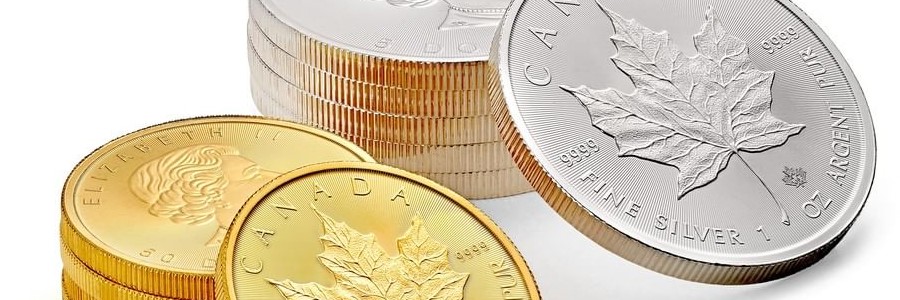
The Week Ahead in Gold

The gold market is on weaker footing in early action Tuesday as traders return from the long Memorial Day Holiday. Stronger stocks and a higher dollar are likely the primary culprits behind the selling today, and the market may see increased technical selling pressure if prices dip below the $1270 level.


The gold market has not seen a fresh leg lower in recent weeks, as any dips have thus far been aggressively bought. Patience on the part of buyers may be rewarded in the weeks and months ahead, however, as numerous issues come into focus that could drive demand for gold and other safe havens while putting a major dent into risk appetite.


The state of the U.S. economy will be a major influence on the markets and could potentially fuel a major reversal in equities. Although the economy remains strong overall, there have been some serious cracks showing up that could be cause for concern. Key indicators such as retail sales and factory output both declined in April. Durable goods orders also declined, further suggesting the economy is losing momentum. Several forecasters have already revised their Q2 GDP estimates lower, and any further disappointments in the data stream could force the Federal Reserve to spring into action.


Also adding to investor angst is the ongoing U.S./China trade war. After reportedly nearing a deal last month, talks fell apart rapidly. There are currently no scheduled meetings for President Trump and Chinese leader Xi Jinping to try to reach an agreement, although there is some optimism that the two leaders will have a chance to talk at next month’s G20 summit in Japan. Some reports have suggested, however, that the two sides are too far apart for a meeting to be productive at this point. China seems ready and willing to take a wait-and-see approach to negotiations, and the war over trade could escalate further with a lack of progress.


Other issues that could potentially fuel demand for gold include the ongoing uncertainty over Brexit, European elections, North Korea and Iran.


With the recent resignation of Prime Minister Theresa May, the ongoing Brexit saga has gotten even messier. Although the gold market has not shown much interest in Brexit thus far, that could change in a hurry if a no-deal Brexit looks likely. Recent elections may suggest that the next Prime Minister could be willing to leave without a deal, and tensions could rise further as the October 31st extension date gets closer.


The dollar may also play a key role in the weeks and months ahead. The greenback has been stubbornly hovering near its recent highs around the $98 level and has thus far not shown much weakness. That could change in a hurry, however, as the Federal Reserve could be forced to start cutting rates. In addition to an increasingly dovish Fed, the currency could also come under pressure as the effects of tax cuts and government spending fade further.


Looking at the bigger picture, there are numerous issues at work that could benefit gold. Given the likelihood of another recession, a no-deal Brexit and a further escalation of the war on trade, it may simply be a matter of time before gold sees a sharp and significant upside breakout.


Trade Talks, Part…

There has been no shortage of headlines over the past several weeks that have continued to unsettle financial markets and maintain focus on the trading relationship between the world’s two biggest economies. Last week ended with China’s crown jewel, Huawei, being added to the US Commerce Departments entity list, restricting US businesses relationships with the Chinese firm. Immediately, the impact was seen in US chip suppliers that provide parts to the hardware giant, and questions arose around Huawei’s phone sales outside of China as their devices would no longer be supported by proprietary apps from Google.

Beyond the company specific impacts, the sentiment in the market has been that the United States and China continued to be further apart than initially assumed, and as confirmed by the US President, Huawei will be used as a prop to reach a trade deal.

The central predicament that will shape investment themes into the summer and through the rest of this year is determining just how likely a trade deal may be. Akin to the very end of December when US equity markets had found a bottom, it was around the timing of a delay in the imposition of tariffs on China that supported stock markets moving higher this spring. And as progress between the two nations was assumed, investors’ appetite for risk continued to grow.

To circle back to this week’s topic, however, there remains no shortage of headlines that have thus created a more than a little concern. Nouriel Roubini wrote earlier in the week of potential consequences and fallout from a US-China Cold War. He details a scenario that sees an ultimate disruption to global trade, and other nations around the world required to pick a side with regards to whom they maintain a trading relationship. Reading the Roubini column on the West coast of Canada certainly creates a lot of shock-value given British Columbia’s export reliance to Asian economies and the investment currently going into LNG.

There are also arguments being made over how much short-term pain a centrally planned Chinese economy would endure to win a long-game negotiation with the United States. Where China lays out multiyear plans for the state’s role in the county’s industrial development and growth, the United States is subject to polarizing political rhetoric doomed and vulnerable to the next election cycle. One story in Bloomberg this week detailed a Chinese government expert opinion that talks could go on for the next 15 years.

Finally, and touched on Thursday evening in an announcement from President Trump, was the idea to impose tariffs on imports from nations that intentionally devalue their currency, which could include China. Beyond understanding how this is implemented and enforced, it circles back to an earlier theme of the last decade that’s been absent from headlines recently, but it is the notion of currency wars.

It centers around the idea of governments and central bankers opting for policy that directly or indirectly competitively devalues their domestic currency against their trading partners to boost their export sector.  It has been argued that this could be an added tool in China’s arsenal to prolong the impact of US tariffs by finally letting the Chinese yuan depreciate over seven-per-US-dollar, a situation we haven’t seen since 2008.

If there’s a lesson here, it may be the idea of short-termism versus playing the long game. There’s a lot of noise in the markets day-to-day, but investment themes like passive versus active investing, or having exposure to safe-havens like precious metals come to mind.

Download PDF


The Week ahead in Gold

The gold bulls will look to stabilize the market in early action this week after the metal saw some sharp declines late last week. The price of gold declined by around $35 per-ounce between Thursday and Friday and has once again found itself in a band of support in the $1280-$1290 region. The selling seen to end last week has caused some technical damage to the daily chart and the bulls will need to hold the $1280 area or risk seeing a fresh leg lower.


In early action on Monday, lower stocks and a weaker dollar index are giving the market a slight boost.


The ongoing U.S./China trade war has been at the center of market volatility and equity declines. After seemingly getting close to a deal in recent weeks, both sides have pulled back from the table. The U.S. raised tariffs on $200 billion of Chinese goods from 10 percent to 25 percent. China retaliated, also hiking tariffs on some $60 billion of U.S. goods. It has seemingly become clear that China is willing to walk away from a deal, and negotiations could take considerably more time than previously thought. Any further negative news on the trade war could potentially send stocks lower while stoking market volatility and safe haven demand.


Perhaps the notion of a protracted and escalating war on trade was behind the recent bullish fund positioning in gold. According to recent data from the CFTC, large specs raised their bullish positions in gold by about 500 percent. Of note was the large increase in fresh longs for the latest reporting period, even as prices were rising. This would seemingly suggest that traders and investors are still looking to gold as a safe haven, and further equity volatility may fuel more buying in the metal.


The stronger dollar index has likely been a major barrier to higher gold prices, and this week’s Fed meeting minutes could potentially be market moving. The greenback has been in a firm uptrend since the first of the year and has not strayed far from the $98 level in recent weeks. An increasingly dovish Fed could, however, give the bears something to work with. The Fed took a decidedly neutral stance last month, indicating that it did not see reason to move rates one way or the other. Recent developments in the trade war could, however, force the Fed’s hand. If the trade war escalates further, it could have a serious effect on the economy and investor sentiment. Not only that, but it has become clear that the lack of a deal may cause further market volatility and equity declines. The Fed could be forced to cut rates in order to fight the negative effects of a lasting war on trade.


With the current economic and geopolitical backdrop being conducive to higher gold prices, a breakdown in the dollar index could be the catalyst for the next major rally. The gold market has shown it does not want to go down from current levels, so it may simply be a matter of time before the market starts a fresh ascent.


The Week ahead in Gold

The gold market is finally seeing some significant flight-to-safety buying as the sell-off in stocks accelerates. In early action Monday, the benchmark Dow Jones Industrial Average is down by some 550 points for a decline of over 2 percent. The recent string of declines has been attributed to the lack of a U.S./China trade agreement and at this point a deal, which was previously reported to be imminent, appears to be a ways off.


The lines of communication will remain open; however, it is also possible that not much happens until President Trump meets with Chinese leader Xi Jinping. The two could potentially meet at next month’s G20 summit in Japan. For the time being, however, the two nations have again ratcheted up the war on trade. Last Friday, the U.S. hikes current tariffs on $200 billion of Chinese goods from 10 percent to 25 percent. China has now retaliated, saying that it will raise tariffs on $60 billion of U.S. goods starting June 1.


In addition to stoking significant market volatility and equity declines, the effects of the ongoing war on trade may potentially benefit gold in other ways. It has been suggested that the trade war could force the Fed to cut interest rates. Such a scenario does make a great deal of sense, as the war on trade could hurt the jobs market and put a major dent in consumer spending. An increasingly dovish Fed could weigh heavily on the U.S. currency, making gold less expensive for foreign buyers. The dollar may also be negatively affected if volatility expands further. The dollar is lower today, for example, as buyers flock to the perceived safety and stability of the Japanese Yen.


Rising tensions between the U.S. and Iran could also potentially impact global markets. The conflict has called into question Iran’s commitment to the 2015 nuclear deal it signed with several UN Security Council members and Germany. President Trump pulled the U.S. out of the deal last year and has re-imposed sanctions. Iran has reportedly indicated it may resume nuclear activities if other partners go along with the sanctions. The U.S. recently dispatched a carrier group to the region and tough rhetoric between the two nations is on the rise.


The gold price is up over $11/oz in early action. The market’s technical picture has improved significantly in recent weeks and a near-term bottom may now be in place. This would seem to suggest that the market is in position to trade sideways to higher, and that any dips will be bought.


Despite an improved technical posture, however, the market will need to maintain some gains to foster further upside. The metal has been frustratingly range-bound for some time now even as U.S./China relations become increasingly strained. The bulls will need to take out psychological resistance at the $1,300 level and then take out the April high around $1,314 to really get the ball rolling.

No Apparent Theme

No Apparent Theme

 Download PDF

A week ago Friday, the US jobless rate fall to a 49-year low. Eleven years into the economic cycle the US labour markets continues to have legs. The takeaway was that with no change in wage growth month over month we are still yet to see and signs of rampant wage growth; therefore, the US labour market has further room to the upside. Additionally, Friday’s inflation data in the US was even weaker than expected. Vice Chair of the Federal Reserve Richard Clarida had to reiterate Chair Jay Powell’s view that the Federal Reserve see’s this drawdown in inflation as temporary and reinforces the view that higher rates may be on hold, but a rate cut is not in the cards.


In Canada, it looks to be a similar story. The jobs numbers on Friday were gangbusters. It was the largest monthly gain for jobs in 43 years. The labour market added 106,500 jobs. A simple back-of-the-envelope calculation comparing growth in the Canadian labour force to the United States would be the equivalent to their economy adding approximately 9 hundred thousand jobs in the month.


It raises two questions. One, what’s taking place in the Canadian labour market to account for the massive monthly surges in private sector hiring? The average monthly job gains over the last 12 months have been double the 40-year average. Second, why does there seem to be inconsistencies between strength in Western Economies labour markets (US, Canada, Europe) as another period of near disinflation and increased policy uncertainty from Central Banks is witnessed?


One attempt at answering the first question certainly speaks to the inconsistency in the Labour Force Survey (LFS) in Canada. One of the easiest comments to make on an anomalous monthly reading is ‘one month doesn’t make a trend.’ For the past couple years though, there has also been major discrepancies between the labour force survey and the more reliable, but less in the headlines, Payroll survey.


Canadian job growth was back around one percent in December (according to the LFS); in April, the labour force survey moved inline with the Payroll survey to show job growth above 2 percent. As monthly job data in Canada is certainly a catalyst for Canadian dollar volatility month in and month out, the ½ cent move in the dollar Friday pared back some of those gains at the close as it merely confirmed already known growth of the Canadian labour market.


The second question is more difficult. In both Canada and the United States its steady and muted levels of inflation right around 2%. And back into the headlines this past week, despite the deterioration in global trade that was supposed to be inflationary for the Canadian and US economies. The now much publicized false statement from President Trump last week was that the increased tariffs on Chinese exports will be paid for by the Chinese economy. That’s not the case as they are typically paid for by the importing business and passed on to the end consumer, but despite the breakdown in talks, the ripple effect seems indistinguishable.


Despite resilient job growth in the US and Canada and a robust stock market year to date that is currently seeing a bit of a pullback, there is still an underlying theme of caution. With heightened levels of uncertainty over whatever the policy topic of the week is, be it trade, pipelines, or any other economic story, it seems difficult to distinguish a apparent theme for the US and Canada. In terms of diversification, long term vs. short term strategies, our thought is this is a great moment to reflect on how and where to be invested.


Global Growth and Stock Market Melt Up?

Global Growth and Stock Market Melt Up?


Download PDF


There were similar patterns over the past few weeks in the first quarter GDP prints from China, the United States, and the European Union. Economic growth fared better than expected. This is notable given the two countries and one region account for over half the world’s output. Unfortunately, it’s not necessarily the case for Canada. The prospects for “better than expected” reports may not be as great and the most recent GDP data for February released last week aligned with the Bank of Canada’s very conservative forecasts.


For reference, China Q1 GDP grew ahead of expectations at 6.4% vs 6.3% forecast. First estimates for US GDP advanced by 3.2% vs 2.5%, and Eurozone annualized growth grew at 1.5% while the unemployment rate dropped to a 10-year-low.


Both the IMF and World Bank amongst other predominant voices have issued concerns over global growth in the beginning of this year. These warnings have been consistent with the reverse shift from Western Central Bankers including Federal Reserve Chair Jerome Powell who spoke of inconsistencies in US growth prospects last week, and Bank of Canada Governor Stephen Poloz whose concerns also echoed the threat of a global slowdown’s impact on the Canadian economy.


It certainly raises a question and is worth reconsidering why policy makers appear so cautious and dovish. Fed Chair Powell created a bit of a stir this week when he used the word “transitory” to refer to inflation. What was gleaned was the Fed sees the inflation slowdown in the US as temporary and for some analysts this raised the prospects of higher US interest rates in the latter half of the year. That said, Friday’s US job numbers saw the jobless rate fall to a 49-year-low at 3.6%, but as wage growth again failed to accelerate the suggestion was there is further room for this US labour market to accelerate.


To contrast the US and Canada though, it’s also worth noting the difference between Powell and Poloz. Whereas Powell almost sounded hopeful on trade relations last Wednesday, Poloz in an interview with Global News this past week stated trade as the biggest risk to the Canadian economy (the last policy statement from the BoC highlighted oil markets, household spending, and global trade as the three biggest risks, which aligns their ranking).


Earlier in the year, it was the notion that the waning impact of the Trump tax cuts, US stocks in a bear market, the trade disputes between the US and China, in addition to steal and aluminum tariffs, and potential for frictions between the US and Europe would all be added impediments to global growth. Certainly, the Canadian economy, stunted by a beleaguered resource sector, seems one step back, but prospects in the US and Europe, buoyed by a strengthening Chinese economy seem a little more optimistic. As the US Fed pointed out, some of the bearish data points could be a result of transitory factors.


Morgan Stanley and Bank of America recently issued a call to investors worried about under exposure to equity markets. They suggested using the options market to capture a sudden move higher in a momentum trade in equities. At the beginning of 2019, it might have seemed eleven years past the Great Recession, we were finally losing some steam, but the question is whether we’re amidst something to the contrary.


The Week Ahead in Gold

The start to the trading week has seen volatility come roaring back into equities. The CBOE’s fear gauge, the VIX, is up nearly 30 percent in early action as the Dow Jones Industrial Average has dropped nearly 300 points. U.S. President Donald Trump caught investors off-guard over the weekend with a pair of tweets that not only expressed frustration with ongoing U.S./China trade negotiations but also suggested that the U.S. would raise tariffs on $200 billion of Chinese goods from 10 percent to 25 percent.


Trade negotiations were set to continue this week in Washington, but it is now unclear if scheduled meetings will take place. Some reports have suggested that the meetings may be delayed a few days while others have stated that talks could be cancelled all together. Markets will be paying close attention to any further developments on trade this week. If talks do continue, things are likely to calm down again. If talks are cancelled, market volatility could see further expansion and stocks could become vulnerable to additional selling pressure.


The ongoing trade conflict has not had the type of effect on gold that many had anticipated. Despite today’s volatility and sell-off in stocks, gold is not seeing much interest. Investors are directing their attention to other perceived safe havens such as the Japanese Yen. Although many gold bulls are likely perplexed by the lack of buying interest in the metal given the rising volatility and uncertainty, it also makes a great deal of sense. If the U.S./China trade war escalates further, it could have a significant impact on the globe’s first and second-largest economies. China is a massive buyer of commodities and further trade tensions could potentially put a significant dent in the country’s appetite for commodities and materials. For now, it seems that gold is being treated as just another raw commodity rather than a safe haven.


The dollar index is also likely to impact the market if trade negotiations fail. The greenback is seeing a slight bid today as risk aversion is on the rise and could see further strength if trade talks are cancelled. Although gold has shown it can rise along with the dollar, a stronger U.S. currency may simply be one more hurdle the bulls must contend with.


The latest Federal Reserve meeting also did not do the market any favors. The central bank essentially suggested that rates are likely to stay at current levels for some time, and chances of a rate cut appear to be much lower than markets had anticipated. Recent strong employment data would also seem to suggest that economic weakness seen in recent months may be transitory and that the Fed could potentially take a more-hawkish tone again in the coming months.


Gold has thus far maintained support in the $1280-$1290 region backed up by its 200-day moving average. An ongoing lack of upside follow-through, however, could open the floodgates to a fresh, significant leg lower in the weeks ahead.