Price gains for Gold on short covering

The gold market is getting the new trading week off to a decent start. Some short covering and bargain hunting has lifted spot gold prices Monday by over $4 per ounce. While the day’s gains are nothing to write home about, they do put the bulls in position to again challenge resistance at the $1800 level. After breaking through that level recently, the bulls failed to extend the rally with a run through resistance in the $1850 area. Prices declined heavily in recent trade, sending the gold market back below the $1800 level and putting the bulls on notice.


Both gold and silver are oversold on a short-term basis. This condition could lead to further upside this week as the market figures out where it wants to go from here. Outside of the oversold condition, the bulls do still have some upside ammunition that could set the stage for a rally.


Inflation remains -and likely will remain for some time-a topic of great concern. The Fed has now acknowledged the problem that rising price pressures is posing, the question is what might it be able to do about it. After falling far behind the inflation curve, the central bank now has three rate hikes penciled in for the year ahead. With the first of those hikes likely taking place in March, the Fed could also hike further than anticipated or at a much faster pace. Whether the Fed hikes more than three times or ratchets up the pace of hikes, the effects will likely be the same. Stocks are likely to trend lower, possibly even seeing some heavy selling and heightened volatility along the way.


As the period of easy money is left behind, the markets will see new dynamics that could make not just this year very challenging but the next several years. The notion of lower equity markets combined with rising inflation is not a good mix, and investors may have little choice but to seek out viable alternatives. While cryptocurrencies such as Bitcoin could see renewed interest and upside, their volatility could keep any upside and investor interest somewhat limited. This could potentially leave gold as the only truly viable alternative asset class for investors to turn to. That demand has the potential to drive gold to new all-time highs and beyond and may keep any dips in the market insignificant over the long run.


As the Fed gears up to begin its policy tightening in the weeks ahead, markets may see an increasing wave of volatility. That volatility may also be driven by other factors as well, including the recent terrorist attacks on the UAE, higher crude oil prices and exceedingly hot inflationary data. This could keep the gold market in a sideways, range-bound type of framework for several weeks or longer. In the meantime, the bulls will keep their sights on the $1850 level, while the bears’ next downside target remains the $1775 level.

Gold Declines As Inflation Fears Take Hold

The gold market is not having a good day Thursday as spot prices are declining by some $25 per ounce. The selling in gold and silver today is being attributed to inflation fears and a stronger dollar. The U.S. Dollar Index has hit a 1.5-year high today as there may be growing belief in significantly higher interest rates in the year ahead. Traders can be a fickle bunch, however, and despite today’s sell-off in the metals, gold and silver could both return to a more bullish trajectory in short order if inflation persists.


The gold and silver markets are being sold as fears over an increasingly aggressive Federal Reserve grow. The Fed has only elected to begin tightening its monetary policy, however, due to the growing inflation problem. Rising prices have historically been a bullish factor for gold and there is simply no reason to think that may differ at all this time around.


In addition to Fed fears, the markets are also paying close attention to the ongoing data stream. Earlier today, fourth quarter GDP was released and showed a rise of 6.9% compared to consensus estimates looking for a rise of 5.5%. The Personal Consumption Expenditures index, or PCE, registered a reading of 6.5% annually in the fourth quarter. This reading was considered to be “hot” by many and points to the ongoing problem inflation has become. Even the weekly jobless claims data was upbeat and there does not appear to be much standing in the Fed’s way of taking interest rates higher and shrinking the balance sheet. Not only that, but today’s data also likely gave the dollar a major boost, and that dollar strength is likely a key factor in gold’s downside today.


Today, markets are still digesting the Fed policy meeting conclusion from yesterday. Although the Fed announcement did not have much, if any, effect on markets, Chairman Powell’s press conference following the announcement may have given markets something to think about. Powell was viewed as being more hawkish than expected, and it now appears that the central bank may be in a lot more of a hurry to get inflation under control. Powell alluded to employment being at a maximum, giving the Fed only inflation to worry about at this point. While the Fed has clearly fallen behind the inflation curve, the question now is just how far the Fed may be willing to go in order to catch up.


A period of heightened volatility could be in store for stocks and risk assets as investors await further clues from the Fed. The first of several rate hikes is now expected in March, and the Fed could at that time lay the groundwork for its plans for the rest of the year.

In the meantime, the gold bulls will remain focused on taking out upside resistance in the $1850 area while the bears look for a close below the $1800 level. A move in either direction could pave the way for an extended move that could take gold significantly lower or back towards all-time high levels.

Some Nerves Ahead Of The Fed

The gold market is seeing some moderate selling pressure today as investors await the conclusion of the Federal Reserve Policy meeting. Although no action is expected from the central bank today, markets will be paying close attention to the Fed’s commentary as well as thoughts from Fed Chairman Jerome Powell following the meeting conclusion. Powell’s press conference today may be more involved than usual, as investors weigh the potential for a Fed rate hike as soon as March.


The Fed is expected today to lay out its plans for the first of several rate hikes in March. Jerome Powell is likely to have his hands quite full, as markets will want to understand the Fed’s thinking on how it plans to deal with persistent price inflation and other factors. In addition to the Fed and the possibility of three or more rate hikes this year, market participants are also concerned over the possibility of a Russian invasion of Ukraine. Russia has stationed many troops along the Ukraine border in a move that seems poised for an attack. Heightened U.S./Russian tensions come at a bad time. There have been multiple terrorist drone attacks in recent weeks in the United Arab Emirates with one of those attacks striking a strategically important oil facility. As crude prices shot up in the aftermath, it was a prime demonstration of how fragile the global oil market remains to be.


In addition to the several geopolitical issues currently taking place, markets will also consider how much hiking the Fed may have to do this year. The central bank currently has penciled in three rate hikes for the year ahead. Numerous analysts believe, however, that there will be at least four or five rate hikes this year as the Fed looks to get problematic inflation under control. The threat of several hikes has already breathed some fear into the markets, with stock market volatility seeing a significant upswing in recent weeks. A period of increased volatility could be in store, and such market conditions could potentially give the gold market a big boost as investors seek alternative places to put capital to work. In the meantime, any exceedingly hawkish commentary from the Fed or Fed officials could give investors reason to sell stocks and head elsewhere.


The gold market remains near key overhead resistance in the $1840 to $1850 area but has yet to mount a serious challenge of this area. Even with today’s decline of nearly $20 per ounce, the market remains in firm striking distance of resistance at the $1830 area. The gold bulls could very well attempt a challenge of resistance on the next major stock downturn day, a bearish day for the dollar or a highly bullish day for crude oil prices. Whatever the case may be, the gold bulls are within a day of testing this key resistance and that may hold the key to further upside in the current cycle. The bears, on the other

hand, will target first a close below the $1800 level and then a test of $1775. A breakdown below $1775 on a closing basis could signal the end of the current rally and further downside could be seen as bearish momentum builds.

Tensions on the Border

The gold market is off to a strong start this week as risk aversion drives equity markets sharply lower Monday. The benchmark Dow Jones Industrial Average is down about 450 points at mid-day and appears headed for a sharply lower close on the day. The risk-off mentality today is giving the gold bulls some ammunition. Gold’s upside has been limited, however, as crude oil prices are sharply lower today while the dollar is rising.


Geopolitics are at center stage this week as the trading week gets going. Iran-backed terrorists have reportedly launched a drone attack against the United Arab Emirates. The attack was intercepted, however, leaving little to no damage done. The attempted drone attack is the second such attack in recent weeks. Terrorists recently launched a drone attack against oil facilities in the UAE, fueling a sharp rise in crude prices. In addition to the threat of terrorism, investors must also consider the possibility of a Russian invasion of Ukraine. Russia has stationed many troops along the border and the U.S. has recently instructed its diplomats to leave the area as war is seeming increasingly likely in the weeks ahead.


Markets and investors will also be looking ahead to Wednesday’s Fed meeting conclusion. The end of the policy meeting will be followed by a press conference with Fed Chairman Jerome Powell. It is now widely expected that the central bank will begin hiking interest rates in March. Powell could provide more evidence of such intentions on Wednesday or could lead markets to believe that the Fed will wait a bit longer. Whatever the case may be, Powell’s press conference has the potential to be market moving. Some heightened volatility and selling are possible ahead of the meeting end, therefore, and today’s stock implosion may be a taste of what could lie ahead.


The gold bulls remain on track to challenge resistance in the $1850 area. Today’s push higher has sent spot gold prices to over $1840 and the bulls may now require additional power to conquer resistance ahead. A solid close above the $1850 level could attract further buying interest into the market, however, and the metal could be off to the races if such a close develops.


As the demand for perceived safe haven assets against inflation rises, cryptocurrencies continue to get clobbered. Bitcoin has now lost half its value from the November highs. Ether has now lost about one third of its value since just Thursday. Although cryptos may have an important place in the portfolios of the future, they have thus far been largely disappointing for many holders. While these currencies may have far more upside potential compared to gold, they also carry a far higher degree of volatility and may not be appropriate investments for much of the public. The debate over whether cryptos can overtake gold is likely to continue in the months and years ahead. For the time being, however, it appears that gold has maintained its place as the top inflation hedge for investors and an asset that can be relied upon and trusted to protect wealth and preserve purchasing power.

Bulls Gaining Momentum

The gold bulls appear to be gaining momentum today, as spot prices are sharply higher in early morning action. Gold is up over $24 per ounce as inflation fears again drive buying. Silver has notched a seven-week high while gold is pushing up against a key resistance level. The next few sessions for gold could be very telling. If the market is able to overtake the resistance in the $1840 to $1850 area, it could be off to the races and see a rapid and sharp rise in value that could push it back towards previous all time highs.


Risk aversion is heightened at mid-week as numerous geopolitical issues are in play. Russia appears to be readying for an invasion of Ukraine, as it has placed well in excess of 100,000 troops along the border. A Russian invasion of Ukraine could potentially pull the United States into the conflict, and one can only imagine how a U.S./Russian conflict could take shape. In addition to the Russian threat of Ukraine, North Korea is back to its old tricks in recent days, again test firing missiles. The United Arab Emirates were attacked just a few days ago by terrorists in a move that has fueled a price spike in the crude oil market. Oil is now trading at a seven-year high, fetching almost $87 per barrel.


Stronger crude oil prices will likely fuel further concern over inflationary pressures and could even slow economic activity if prices get high enough. As oil approaches the $100 per barrel level, it also begs the question of if the U.S. will release some of its crude reserves to lower prices in the marketplace.


The threat of lasting inflation seems to be on the rise. Overnight, the U.K. reported its Consumer Price Index at the highest level in three decades. The 5.4% rise for December year-over-year will likely give markets something else to worry about and may give the Central Bank of England more to ponder as it lays out monetary policy.


Dollar weakness today may also be giving gold a boost, although that boost may be limited by treasury yields. The benchmark 10-Year Treasury is currently yielding 1.89% and seems poised to try to rise to 2% or higher in the weeks ahead. The 10-Year German Bond has risen into positive territory for the first time in nearly three years today, currently fetching a yield of .008%.


The rise in yields is something that could continue to weigh on the gold market. The higher yields could be offset, however, by a weaker dollar, geopolitical risks and the threat of inflation. For the time being, the gold bulls are still in control of the daily chart, and with today’s solid upside are looking to solidify that control. An important test of resistance could be seen in the days ahead, and if gold is able to stage an upside breakout, the market could blast higher in short order.

Higher Dollar and Yields Fueling Gold Decline

The gold market is lower today as traders return from the long holiday weekend. As the benchmark Dow Jones Industrial Average craters by over 600 points in early afternoon trade, the gold market is not faring much better. Spot gold prices are currently down about $8 per ounce as the day session comes to a close. Keener risk aversion is also not giving gold much of a boost today, as some traders may be forced to liquidate gold positions in order to meet equity margin calls.


The story of the day for gold, however, is the continuing rise in treasury yields. The two-year note is now fetching over 1% today, while the benchmark 10-Year treasury is now yielding some 1.856%, the highest yield seen in some two years. The dollar is also seeing a strong rebound today after hitting a two-month low last week. The combination of dollar strength along with higher yields is likely causing some gold investors to hit the sell button.


In potentially bullish news, China has cut its main interest rate to boost economic activity. The Chinese action comes at a curious time, as other global central banks are now in the process of tightening their monetary policies. Chinese President Xi Jinping has also warned other nations not to raise rates too aggressively, as doing so could put the global economy on thin ice.


The crude oil market is also pushing higher today following the recent drone attack on the United Arab Emirates. Although the damage was limited, the attack has reminded the world how fragile the crude market can be and how producers are vulnerable to drone attacks. The higher oil price may benefit gold in the days ahead, and if oil approaches the $100 per barrel level, it would likely fuel further inflation talk and concerns over rising price pressures.


In addition to the UAE drone attack, North Korea is again testing missiles today in what could become a major standoff as the U.S. and its allies look to control the nation’s nuclear capabilities.


Despite today’s selling in gold, the bulls still have the near-term advantage on the daily chart. The next upside target for the bulls is to produce a close above solid resistance in the $1840-$1850 region. The bears, on the other hand, will continue to target more downside in the hopes of driving the metal below support in the $1775 area.


The next several weeks are likely to be key for gold in the year ahead. The possibility of a rate hike coming as soon as March, as well as an increasingly aggressive Federal Reserve, could keep the gold bulls guessing. Despite thoughts to the contrary, the period of rising rates could be highly bullish for gold, as the yellow metal has shown a tendency to rise during previous tightening cycles. Whether that proves to be the case this time around is anyone’s guess, but it seems that markets are likely to find out before long and that could dictate price action for the remainder of the year.

Gold In No Man’s Land

The gold market is slightly lower in mid-morning trade Friday. The yellow metal is not showing much of a reaction to changing inflation expectations and a corresponding drop in consumer sentiment data. The latest University of Michigan Consumer Sentiment data declined to a reading of 68.8, down from the previous month’s reading of 70.0. The decline, according to some analysts, can be attributed to the survey’s inflation expectations.


According to the survey, inflation expectations for the year rose to 4.9%, up a tick from the previous month’s reading for a rise of 4.8%. The longer-term 5-10 year inflation expectation reading also saw a climb, rising to 3.1% from a previous reading of 2.9%.

Inflation data has been the talk of the town in recent months, and this week was no different. In addition to today’s data, the Consumer Price Index (CPI), released earlier this week, showed a rise of 7%.


The threat of rising and ongoing inflationary pressures may keep investors on their toes in the months ahead and could fuel market volatility in the year ahead. The Fed has already said it will taper its monthly security purchases at a faster rate and has penciled in three rate hikes for the year ahead. Whether three rate hikes will be enough is the subject of debate, as numerous analysts, including an economist from Goldman Sachs, have suggested the Fed will need to hike rates a minimum of four times to get inflation under control.


The notion of rapidly rising interest rates could put stock investors on edge and may also be a major factor for market volatility in the year ahead. The Fed certainly does not want to upset equity investors or send waves through the markets. The central bank may be forced, however, to decide whether to let inflation run hot or risk a major stock market sell-off and reversal. The Fed now seems willing to let equities turn lower and appears more focused on the risks posed by inflation than employment or other issues. An increasingly aggressive Fed could not only fuel selling in stocks and risk assets, but may actually also drive buying in gold and perceived safe havens. In fact, the gold market may begin to really rally and eventually break out of its trading range to the upside once the Fed does start to raise rates. This may be contrary to popular belief but has happened before and is likely to happen again.


Gold remains in its trading range for the time being, but has shown some positive sign in recent weeks. The bulls have been able to take gold back above the key $1800 level on a closing basis and will now set their sights on resistance in the $1840-$1850 area. A breakout above this could pave the way for much higher prices in a short period of time. The bears will continue to look for a breakdown. The first target for the bear camp is taking gold below the $1800 level. From there, a decline below $1775 would be next.

Fed Flexibility To Lead Gold Higher

The gold market saw some relief yesterday as Fed Chairman Jerome Powell testified regarding his nomination to retain his seat as Fed Chair for another four year term. The price of gold shot higher, rising well over one percent, on the notion that the Fed may maintain a high degree of flexibility as it looks to battle rising price pressures in the year ahead.


Powell did not push back on any expected rate hikes by the Fed, but rather solidified the idea that the Fed has allowed themselves maximum flexibility and optionality when it comes to dealing with price pressures. Put simply, the Fed’s path to policy normalization is not set in stone and could see many twists and turns along the way. Powell’s commentary yesterday sent a wave of relief through markets. The dollar declined, crude oil rose and the gold market shot up.


Any dollar weakness could set the gold market on fire. Recent dollar strength has likely been a major factor for gold’s lack of upside, and any relief from that dynamic is likely to have the opposite effect, sending gold sharply higher. Of course, inflation will remain a hot topic along the way as well, and this week’s inflation data could set the stage for dollar price action in the weeks ahead.


The Consumer Price Index released Wednesday showed a rise of 7% for prices in December. The release of Producer Price data today, however, showed a rise of just .2%, half of consensus estimates for a rise of .4% The data could potentially put gold into a holding pattern of sorts as some may now make the argument that inflation pressures have in fact peaked for the cycle.


It is likely far too early to tell if inflation has in fact peaked. The slowing pace of rises may, however, provide some clues about the threat of inflation moving forward and could be viewed as being bearish on inflation. That trend may not last long , however, and the price pressures seen in recent months could very well resume their strong upward trajectory without warning.


Investors may have to take a wait and see approach as to how inflation and the Fed may play out in the months ahead. The Fed has already penciled in three rate hikes and will also look to unwind its balance sheet in the months ahead. Numerous analysts have said the Fed will need to hike more than three times, and some are expecting the central bank to hike not three times but four at a minimum. Any increasingly aggressive policy changes by the Fed are likely to upset equity investors and drive volatility. The Fed will certainly want to avoid this, but having seemingly backed itself into a corner, it may be unavoidable at this point.


For the time being, the bulls will look to take prices above resistance in the $1840 area. The bears will target a decline below the $1775 level to get things going.

Pressure Remains Following Hawkish FOMC Minutes

The gold market is under significant selling pressure again today as investors react to Wednesday’s release of the latest FOMC meeting minutes. The minutes were decidedly more hawkish in nature and suggested the Fed could start raising interest rates sooner than expected or more than expected. The market seemingly was caught off-guard and both stocks as well as gold were hit in the aftermath.


The minutes suggested that inflation concerns currently outweigh the economic risks presented by the Omicron variant. Fed Funds futures markets now point to a greater than 70% likelihood of a rate hike in March.


Despite the Fed minutes, the central bank will have to walk a very tight rope in order to accomplish its objectives. The Fed now seems very far behind the inflation curve and perhaps ready to take action. That action could, however, upset the economic balance and fuel a massive sell-off in stocks or an equity market reversal. Although the Fed will try to avoid rocking the boat as much as possible, it seems to now find itself backed into a corner from which there is no simple escape. As the Fed looks to normalize policy and quell inflationary pressures, it risks causing a significant economic slowdown or possibly even a recession. These risks may point to heightened volatility in the months ahead, an issue which could be bullish for gold and perceived safe haven asset classes.


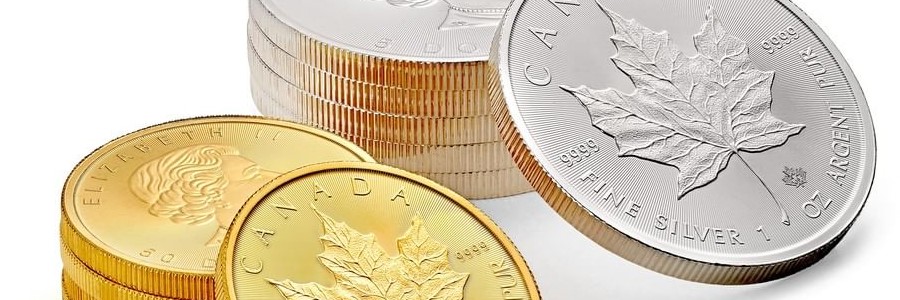
Demand for physical metals remains strong despite some of the headwinds that may be on the horizon. The U.S. Mint recently reported that sales of its iconic American Gold Eagle coin were the strongest last year since 2009. The gold buying was not limited to seasoned investors, either, as new investors also got on board the gold train and started buying bullion.


The year ahead looks as if it might also see stringer bullion demand. As inflationary pressures mount further, investors may seek out gold’s perceived safety and wealth protection. If stocks do weaken based on higher interest rates, investors could also seek gold as a viable alternative that can offer protection not just from inflation but from a weaker dollar and geopolitical risks. Despite gold’s recent weakness and downside, the market has remained within its trading range and no significant damage has been done to the bullish case. That being said, however, the bulls will need to show some strength and show it soon or risk further selling pressure. The bears are targeting the $1775 level currently. A breakdown below this area on a closing basis could open the door to far more significant selling pressure that could see prices dip as low as $1600 before taking a pause.

The bulls will continue to look at resistance in the $1840 area as a next target. Given today’s slide, however, the bulls will first need to take the market back above the $1800 level on a closing basis before more momentum may be seen.

Physical Demand Remains Strong

The U.S. Mint recently announced that demand for physical gold hit its highest level since 2009. The mint said sales of its iconic American Gold Eagle coin were up 48% from the previous year, totaling some 1.25 million ounces of various denominations. Although gold saw some very strong months early in the year, the later months also saw heavy buying. The months of October and November both saw heavy physical demand as the threat of inflation became a reality.


It wasn’t only seasoned gold investors getting involved. The gold market saw a large number of new investors entering the market. Recent stock market volatility in the Dow Jones and Russell indexes shows how gold may be viewed as the only reliable source of money there is. In addition to market volatility, gold’s case as the only stable form of money on the planet is also bolstered by runaway government spending, massive sovereign debt levels and other economic issues. Ultra-low interest rates combined with QE measures have also lent credibility to gold’s reputation and may continue to do so if the Fed finds itself stuck and unable to raise rates enough.


The quantity of gold coins purchased by investors last year may just be the tip of the iceberg. The Fed has already announced  plans to taper its QE purchases and has penciled in three rate hikes for 2022. Although this was initially viewed as being bearish for gold, some doubts remain that the Fed will be able to raise rates three times, regardless of what inflation may be doing. These doubts about the Fed have kept the price of gold from falling through the floor and may continue to do so in the months ahead. The Fed has done a great job of backing itself into a corner. The central bank will now have to try to find a way out, the only problem is there may not be one. If the Fed chooses to aggressively raise interest rates, the economy will slow and stock investors will likely run for the exits. If the Fed keeps rates low, on the other hand, inflation is likely to become even more out of control and price pressures may have a significant impact on the global economy.


The Fed appears to be in a can’t-win position regardless of what it chooses to do. This may keep buyers interested in the gold market despite any rate hikes or lack thereof, and may keep pressure on the Dollar Index. Any weakness seen in the dollar may also boost demand for gold as it has a tendency to exhibit a negative correlation.


Despite some recent volatility and weakness, the gold market may have a very encouraging 2022 to look forward to. Having maintained its recent trading range for several months now, the bulls could simply be gearing up for a major push higher that could take the metal to all-time highs or beyond.