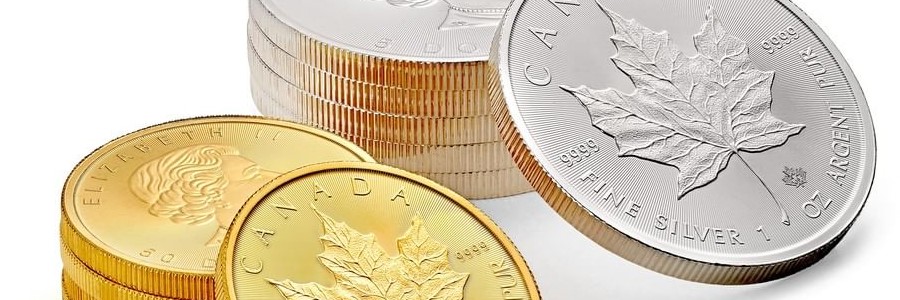
Gold Bouncing Back

The gold market is seeing some buying Tuesday as the metal bounces back from the significant sell-off seen on Monday. After a poor start to the trading year, gold is attempting to hold its ground higher Tuesday as some key pieces of economic data missed expectations. The yellow metal is holding above the key $1800 level in what may be viewed as a sign of strength.


The latest reading of the ISM Manufacturing Index was a disappointment this morning, coming in at a reading of 58.7% last month. This figure represents a nearly 2.5% decline from November’s data and also fell short of expectations for a reading of 60%. Despite signs of an improving labor market, the report did note the challenges being faced by companies as the effects of supply chain constraints remain strong. Manufacturing is being affected by a variety of Covid-related issues including parts shortages, worker absenteeism, overseas supply chain issues and high worker turnover. Despite these issues, however, the strength of optimism being seen remains high.


The survey captured economic activity at the end of the year. It was likely done too early to measure the impact of the Omicron variant, however, which may take several weeks to capture the effects of supply disruptions and other factors. Manufacturing could potentially slow, significantly, if the opaque of the variant spread is not slowed. New cases of over 1 million per day, for example, could greatly inhibit the pace of manufacturing and could send the economy into recession.


The economic data stream is likely to remain an important factor for the gold market. As the Fed prepares to begin hiking interest rates this year, it seems as if an increasing number of analysts believes the gold market will be unable to withstand the changes to monetary policy. Some analysts have suggested that gold prices are likely to decline to pre-pandemic levels over the course of the year, as an unwinding of the Fed’s super accommodating policy will be viewed as strongly bearish for the yellow metal. Of course, time will tell if this in fact proves to be the case. A very weak period of economic data could, for example, give the Fed reason to reconsider its plans regarding policy. The central bank will already be forced to walk a tightrope of sorts as it looks to normalize policy, attempting to avoid any major equity market disruptions along the way. A streak of weaker data could pave the ebay for the Fed to keep interest rates at or near current levels. Doing so may also help it avoid any major equity sell-offs or a trend reversal in equities. While doing so may keep a floor under equity markets, it could also be viewed as being highly bullish for gold, as there may be no significant changes in opportunity cost.


The bulls remain in control on the daily chart. Their uptrend will need to be verified soon, however, or the market may see an increasing risk of reversing course. The bulls will target resistance in the $1840 area while the bears will look to take process below $1775 to gain momentum.

Gold Sharply Higher to Finish 2021

The gold market is seeing some solid buying on New Year’s eve, the final trading day of the year. The yellow metal is putting in a good showing today to cap off the end of a losing year in which the metal declined by several percentage points for its worst annual decline since it lost 10% in 2015.


The yellow metal today is likely benefitting from some end of year position squaring and possibly some short covering. The metal is higher despite some weakness in crude oil today and some steadiness in the Dollar Index. Yields on the benchmark 10-year treasury are at 1.51%. The 10-year yield notched a .6% gain for 2021, the largest increase seen in eight years. Although yields have quieted down some in recent weeks, rising yields could remain a source of market tension in 2022 and could weigh on gold prices as the year gets going.


As 2021 winds down today, investors will turn their attention to the upcoming year ahead. Numerous issues remain that could affect the gold market, and volatility could see an upswing as the Fed gets ready to tighten policy. The two biggest issues being faced by the gold market for 2022 are monetary policy and inflation.


Inflation has been running hotter in recent months. Despite the Fed’s earlier assertions that inflation was “transitory” in nature, Fed officials have now seemed to acknowledge that rising price pressures are a problem and could be here to stay. It is these rising prices that have likely been the primary factor in the Fed’s decision to taper its monthly security purchases faster than anticipated and to pencil in three rate hikes for next year. If inflation accelerates further, the Fed could find itself forced to raise rates further and/or faster, and that could potentially upset markets a great deal. Any surprise action by the Federal Reserve could set the stage for a stock market reversal or a major sell-off.


Equity markets could also hold some keys to gold’s fortunes in the year ahead. If stocks do reverse course and begin trending lower, it could benefit gold and other perceived safe haven asset classes. A major equity sell-off could have the same effect, although investors holding gold could be forced to liquidate those positions in order to raise cash to meet equity margin calls.


Whether it is up or down, 2022 could be a breakout year for gold. The yellow metal has been range bound for several months now, with neither the bulls nor the bears having enough ammunition to stage a sustainable breakout or breakdown. That could change in the year ahead, however, as investors become more in tune with the Fed and its decisions on policy. For

the time being, the bulls will look to take out resistance in the $1840 area while the bears will look for declines to the $1750 level.

Gold Holding Ground Near $1800

The gold market has certainly seen some ups and downs in recent months. Worries over inflation, dollar weakness and uncertainty over central bank policies have all been bullish for gold. An increasingly hawkish Fed has, however, pierced that balloon of bullishness and let out much of the air in recent weeks. The Fed has not only announced its plans to begin tapering its monthly security purchases but has also now said it will look to wrap up those purchases at a faster pace than expected. This means the Fed could possibly be done with its monthly security purchases as soon as March. The central bank could then begin to hike rates right away as it has already penciled in multiple hikes for 2022.


As is so often the case, however, the Fed could be wrong. The Fed has judged economic strength to be enough to carry the economy through a series of rate hikes. While the Fed could be correct in its assessment, it also stands to reason that equity markets and risk assets could see prices crumble once the tightening process begins. Stocks have risen over several years now and many analysts believe the primary reason for the seemingly never ending upside in equities is the easy Fed monetary policy. Markets and investors do like free or cheap money, after all, and the Fed has gone out of its way to provide a whole lot of it in recent years. Once the Fed turns the spigot off, however, is when things could get interesting. That day seems to be quickly approaching at this point and it is unclear if anything may change the bank’s thinking at this stage of the game.


In what may be a sign of underlying strength, gold is holding onto some gains today even as the economy posted third quarter activity that was stronger than expected. The economy grew by 2.3% for Q3, higher than the consensus estimates for a 2.1% rise. The more robust data set could potentially fuel downside in gold, as it could pave the way for the Fed to begin a more aggressive policy stance. The bulls did not seem overly interested today, however, and that could be due to several reasons, one of which is the day’s low trading volumes and lack of activity. This lack of activity is likely to continue through the first of the year and it may be difficult to trust any market action until larger players and volumes return.


The next several weeks should be more exciting. As investors return to the marketplace, prices could see heightened volatility and more sustainable moves in either direction. The gold market could see a rapid rise back above the $1800 level, and with some key resistance cleared out, could go on a rapid run higher that could even take it back towards previous all-time highs or beyond. Of course, the market could also become increasingly vulnerable to more selling. A run below the $1750 area could set the market up for a dramatic decline that could see mid $1600s or lower before it ends.


We continue to believe, however,. That the long-term outlook for gold is bullish and that prices will be higher, much higher, in the years ahead. The yellow metal could show how much patience pays as it is likely only a matter of time before new all-time highs are achieved.

Omicron and Uncertainty


The gold market is slightly lower in mid-day trade. Despite declines being seen in the Dow Jones Industrial Average of over 600 points, the yellow metal has been unable to generate any type of bid. There are several issues likely at work today putting a risk-off mentality into the markets, and the ongoing viral pandemic is without question a major factor in the day’s equity market declines.


Worries over major global economic shutdowns are likely playing a role in today’s major stock sell-off. The Omicron variant is wreaking havoc right now in certain parts of the world, and with the Christmas Holiday just around the corner, it is even more likely that a major spread could be seen. Such a spread could force governments to close businesses and services while putting a massive dent into global economic activity. These worries are causing some analysts to lower their economic forecasts for next year and could even weigh on the Federal Reserve and other central banks as they look to begin tightening monetary policies. The Covid-19 pandemic is simply raging in some parts of Europe right now, causing fresh business closures and travel restrictions. The Omicron variant is also a major problem and is currently very active in some parts of the U.S. The holidays may only cause further spread of the virus and the weeks following the holidays could get quite nasty as the effects are seen.


In other market news, the Biden Administration’s  Build Back Better program may now be dead in the water. The plan’s blockage is also causing analysts to dial back their forecasts for 2022 and is being viewed as a major loss for the President. The U.S. Government isn;t the only government in the news today. China recently lowered its one-year loan prime rate, although the cut is having little impact on markets thus far. With another property developer potentially in big trouble, China may become a greater source of market anxiety than relief in the months ahead.


Crude oil took a major blow today, declining by 6% in early action as worries over the viral pandemic resurfaced in a major way. With oil now trading well below the $70 per barrel level, it could potentially alleviate some of the recent concerns over inflation and may take away from gold’s attractiveness as an inflationary hedge.


Despite the several bearish issues being seen today, it is important for investors to stay focused on the bigger picture. This week is a holiday-shortened trading week and as such may exhibit heightened volatility and selling. Lower trading volumes can exacerbate these effects and more volatility may be seen before traders call it a year.


The gold bulls have their work cut out for then in the near-term. While the market has not strayed far from the $1800 level thus far, it has also been unable to post a meaningful close above this key level which may be necessary to attract further buying interest. The bears too have been unable to extend gold’s recent weakness, and the $1750 level is likely the next primary target.

U.S. Economy To Remain Strong

The markets and investors are still digesting Wednesday’s FOMC meeting announcement. The Fed now has plans to taper quicker, and its monthly security purchases could be at an end by March of 2022. The Fed also alluded to multiple interest rate hikes, suggesting that it is looking at three quarter point hikes for next year. Given recent employment data, the Fed must feel it has good reason to adjust its policy and take a more aggressive approach. The Fed may also simply realize how far behind the inflation curve it has already fallen and may feel the need to act and act now to try to quell the rapid rise in prices being seen.


Whatever the Fed;’s thinking is, the economy is still showing signs of strength. New weekly jobless claims last week were slightly higher, but kept the amount on trend for tightening labor market conditions. Recent manufacturing data rose to a three-year high in NOvember while home building hit an eight-month plateau. All key data points are looking at more improvement in the coming year, and that economic strength may give the Fed more reason to tighten.


The Fed must walk a tightrope, however, as it looks to tighten policy without strangling economic activity. Although three quarter point rate hikes may send the economy back into recession, the central bank likely lacks any additional room to raise rates further. Three rate hikes next year would still keep the Fed Funds rate under 1% which may be a very far cry from where rates need to be to contain rising inflation. The period of massive inflation seen in the 1980s took interest rates to 20%, a level which certainly would not be tolerated by investors or markets at this point. Some analysts have suggested that a Fed Funds rate of 1.5% would likely act as the breaking point, and anything higher than that would cripple the economy and even spur a recession.


Of course, time will tell if the economy remains on its current hot streak. With the ongoing Covid-19 pandemic and the new variant spreading rapidly, it is impossible to tell how the economy and markets may be affected in the months ahead. Certain areas of Europe are already closing their borders once again. A full scale closure in major European cities and U.S. cities would likely change the Fed’s thinking and could keep rates from rising too far too fast, or possibly at all. Not only could the viral pandemic keep pressure on markets and the Fed, but so too could inflation and dollar weakness.


Despite recent market hiccups and despite the Fed possibly raising rates from the zero level, the gold market is still likely to see a bright future. For the patient, long-term investor, gold’s recent trading range could be an excellent place of value to buy for the long run. The Fed has backed itself into a very tight corner, and regardless of what it does or does not do with policy, the outlook for gold is as bright as ever. That makes right now the ideal time to buy physical gold as current prices may not be seen again once the market sees liftoff.

The Waiting Game Begins

The gold market is slightly lower in mid-morning action today as investors await the FOMC meeting decision and press conference this afternoon. This could be the most important Fed meeting in some time. The central bank is expected to announce a faster pace to its monthly security tapering process which could now be finished up as soon as March 2022. The end of the monthly security purchases would then pave the way for the Fed to begin raising interest rates. Despite the Fed’s reluctance to hike rates, it is seemingly left with no choice as inflation is running at the hottest clip in some four decades.


Many analysts are now suggesting the Fed will raise rates several times next year. Expectations seem to range from two to four rate hikes, and any hike in rates is likely to set the stage for a very different investment landscape. As the Fed attempts to normalize policy, it is likely to send stock investors on the run and may bring with it a heightened level of volatility and large amounts of selling. Some have even recently suggested that markets could decline by a whopping 50% as rates rise. Whatever the case may be, it seems as if a wild ride could be in store for financial markets over the next year.


Inflation has been a major topic of concern in financial markets recently and the threat of even higher price pressures may keep investors nervous. Analysts at Saxo Bank recently suggested that inflation could rise some 15% next year if wage inflation spirals out of control. Such a rise would overshadow the major inflation seen in the 1970s and could have a long lasting and significant impact on markets and investors. While a 15% rise in inflation may seem outrageous, it is likely not as far-fetched as it may appear at first glance. The Federal Reserve is already well behind the curve and will likely remain well behind the curve without drastic action.


Many investors assume that higher rates are a negative for the gold market, and while theta may be true

under some circumstances, it does not seem to be the vase currently. If the Fed raises interest rates, real yields are likely to stay quite low. Not only that, but any increases in the Fed Funds rate could have a dramatic, negative effect on global equity markets and would likely fuel safe haven demand for gold. Put simply, it seems as if the gold bulls are in a win/win situation. The winning may just take some time to be seen, but for the patient, long-term investor it will arrive soon enough.


The next several months for gold could be filled with volatility and doubts. Despite any further downside seen, however, the long-term outlook for the market has not changed. Rates could rise several percent before a real opportunity cost is felt , and such a rise is extremely unlikely as it would likely cripple the economy.

2022 Could Be Breakout Year For Gold

Most gold investors will be happy to leave 2021 behind. The year, despite seeing some blips of upside, was marked primarily by gold lacking any significant follow through. This kept the metal mostly under wraps despite a red hot commodity market. The main reason for a lack of follow through could likely be attributed to worries over the Fed raising interest rates and putting a halt to its monthly security buying.


The Fed in recent weeks announced that it would begin to taper its monthly security purchases, or QE, designed to keep rates low. The Fed Chairman has since suggested that the central bank may need to taper faster than originally anticipated, and some analysts are now looking for the Fed to begin hiking interest rates sooner than previously thought.


Have the recent Fed actions and commentary caused the floor to fall out underneath the gold market? No. Have they driven some volatility in the market? Sure. Will the Fed continue to be a source of selling and heightened volatility within the gold market? That remains unclear. In fact, Fed actions could have the opposite effect of what many think.


Even if the Fed does follow up its security purchase tapering with some rate hikes, would that have a dramatic impact on real rates? Probably not. If the Fed, as some believe, tries to hike rates multiple times-say three or four hikes-could that mean the central bank is becoming too aggressive? Absolutely. The question investors ought to be asking themselves now is how high rates could reasonably go, not if the Fed will begin to tighten them.


The Fed has already stepped in dung, insisting that the period of inflation was transitory in nature. Chairman Jerome Powell recently alluded to the Fed’s missteps, and suggested that the term transitory be “retired.” The Fed now seems to realize and acknowledge the fight it is facing. Inflation is likely here to stay, and with the Fed already well behind the curve may be more difficult to fight than ever before. The central bank now finds itself backed into a big corner, and it may lose credibility whether it tightens policy or not. The Fed’s lack of action in recent months, even years, could be the key to higher gold in the years ahead.


If the central bank maintains the current status quo and maintains a very accommodating level for rates, inflation could run very far out of control. This could keep investors eyeing the gold market and could keep the yellow metal moving higher over time. If the Fed decides to aggressively raise rates, it is likely to upset equity investors and fuel significant selling and volatility

across risk assets. This may also prove to be bullish for gold over the long run .


For the time being, gold is likely to maintain its recent trading range until a stimulus comes along that causes significant change. That stimulus may come in the form of aggressive Fed action or a lack thereof.

Gold Higher After Hot Inflation Data

The gold market is seeing some moderate gains in early afternoon trade Friday. This morning, markets got the latest release of CPI, which showed a rise of 6.8%. The report noted this was the largest 12-month increase seen since 1982, and inflation at a 30-month high is certainly giving investors something to think about.


With inflation continuing to pose a problem, the Fed may be forced to act sooner than expected. The central bank has already laid out its plans to taper its monthly asset purchases and Chairman Jerome Powell has already laid the groundwork for the Fed to taper at a faster pace than previously thought. Today’s CPI reading could, however, also give the Fed reason to hike rates faster than expected. Some analysts now believe the Fed could be on track to raise interest rates by June.


The threat of an increasingly aggressive Federal Reserve and higher interest rates has given the markets the creeps for months now. Markets like low rates and free money, and anything that could stop that  will be seen as a major threat. The notion of rising rates and a more aggressive Fed could keep investors on their toes and may even threaten the stock market rally. It has been widely discussed, for years now, that equity markets may be rising not due to corporate profits or future earnings, but due to an easy Fed and extremely dovish monetary policies. It seems now that the next several months could be very telling, and will either prove that to be the case or show otherwise. As market fears over the potential for higher rates take hold,. Volatility is likely to take off and stocks could see some significant selling pressure. This could keep interest in gold and other hard assets elevated and could lead to a significant run higher for the yellow metal.


In addition to rising inflationary pressures, markets are also watching the new Covid-19 variant. The variant has the potential to cause a global economic shutdown once again, and could lead to significantly slower economic activity. Either way, the variant is likely to fuel shipping bottlenecks and could be a major factor behind further supply chain issues. If that is the case, it comes at a very challenging time, when shipping and global supply chains are already under major stress. These issues could keep the price of goods and services elevated for the foreseeable future and are likely to feed into the current inflation narrative.


Despite what the Fed may or may not do, it seems the central bank is already well behind the inflation curve. The Fed will need to be very careful as it could risk a major economic slowdown by raising rates. If the Fed is overly aggressive, higher rates have the potential to send the economy into recession.


The next several months are likely going to feature increasing volatility and the potential for a major stock reversal. These issues could keep gold in its recent trading range and may even force the metal higher.

Bulls And Bears On Level Playing Field

The gold market is seeing some sharp declines again today as the bears garner additional momentum. Today’s declines have now negated the previous uptrend and have put the bulls and bears on equal ground. That could make for some very interesting price action in the days ahead as volatility could see an upswing from here as the two sides battle for control of the metal.


The one-month low seen in gold today may attract further selling pressure into the market in the days ahead. That selling pressure could be counteracted, however, by concerns over the employment report due for release Friday. The heavily watched non-farm payrolls data is set to show an increase of 573,000 jobs, a modest rise from October’s addition of 531,000 jobs. The jobs figure is arguably the most important piece of economic data released on a regular basis. A stronger than expected showing of jobs data could give the Federal Reserve more reason to taper and taper faster than originally anticipated. A weaker than expected figure, however, could set the stage for some rethinking by the Fed and possibly even an adjustment of its tapering timeline. At this point, the gold market would likely benefit from weaker data as it could keep the Fed on hold longer, lessening the opportunity cost of holding gold in the process.


The first U.S. case of the Omicron Covid variant was discovered yesterday in California. That news, while not unsuspected, still rattled stock markets yesterday. It has been suggested that the variant is no more severe than other strains. However, and may even be less severe. Vaccination may also prove effective against the newest strain. Despite these assurances, however, markets may remain quite vulnerable to Covid volatility in the weeks and months ahead. Higher levels of volatility could potentially fuel a sell-off in equities and much of that capital could find its way into the gold market.


Although gold has some issues working against it, the yellow metal does still have the threat of increasing inflation on its side. Earlier this week, Fed Chairman Jerome Powell suggested that the central bank may have to taper its monthly bond purchases quicker. This commentary was far more hawkish than previous talk, although it is important to be clear that despite some hawkish rhetoric, the Fed is still maintaining dovish policies. Powell’s comments may suggest that the Fed is already far behind the inflation curve and now acknowledges that. The central bank could, therefore, be forced into playing catch-up later in the year.


Powell’s previous suggestion that inflation was likely to be “transitory” in nature has been proven flat wrong. Prices are now at multi-decade highs and are not showing any signs of letting up any time soon. Price pressures could keep investors looking for ways to protect their assets and purchasing power, and gold is likely the best bet for them to do exactly that.

A Faster Fed Is Spooking Markets

The Federal Reserve and its monetary policy have been the topic of much debate in recent months. The central bank finally announced its plans to taper its monthly security purchases, or QE, and seems to be coming to the realization that inflation is a real problem and not simply transitory in nature. Today, Fed Chairman Jerome Powell alluded to the Fed acting quicker than expected and ending its monthly purchases at a quicker pace.


The comments from Powell sent gold from sharp gains into negative territory, while fueling a significant downturn in stocks that has seen the Dow Jones Industrial Average decline by over 600 points. Earlier this month, the Fed began tapering its monthly purchases by a $15 billion per month pace. That pace apparently may not be fast enough given economic strength and inflation risks. Although Powell’s remarks were definitely hawkish, the Fed may also be forced to weigh the potential effects of the Covid-19 variant that has begun spreading. The Fed will learn more about the variant over the next two weeks prior to its next policy meeting on December 14th and 15th.


The Fed boss did seem far more stern about his concerns over inflation, suggesting that the threat of persistently higher inflation has grown. This represents an important reversal for Powell and the Fed, who recently described inflation as being transitory in nature. Powell said the Fed would use its tools to prevent entrenchment of inflation. That would certainly seem to suggest that not only might the Fed end its QE more rapidly, but that interest rate hikes could even follow if price pressures remain.


Speaking of inflation, Powell said that higher prices currently being seen may be directly traced back to the pandemic and supply bottlenecks seen when economies were reopened. He did sound concerned, however, about the widespread increase of prices and voiced his concern over inflation being more of a long-term issue. Powell did suggest too that inflation may work itself out by the second half of next year, although he seems to be hedging his position.


A more aggressive Fed could fuel market volatility unlike what has been seen in recent years. An increasingly hawkish Fed could, for example, fuel more selling in gold and hard assets as the opportunity cost rises. Stock investors could also decide to sell, however, as markets love free money and the era of free money seems to be coming to an end. It remains unclear, however, if the outflow from equities may find its way into gold or other hard assets. As is often the case, time will tell.


The gold bulls are still hanging onto control on the daily chart by a thread. Severe declines today may negate that bullish control as the bears gain further momentum. The bulls still need to take out last week’s highs around $1853 while the bears will target $1750. Price swings and volatility may see an increase in the weeks ahead and a real trend may not make itself clear for some time yet.