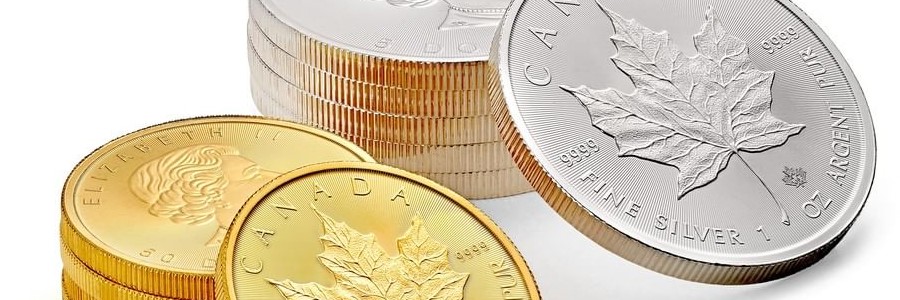
Central Banks Still Buying

Recent data from the World Gold  Council suggests that global central banks remain strong buyers of gold. Global central banks added just over 30 tons in July to their holdings, a figure that was inline with net purchases the month before. Gross purchases for July tallied some 34.3 tons, while net purchases for June had totalled some 63.1 tons.


Despite July’s lower net purchase figure, the data does point to a continuation of a trend in central bank buying. Large purchases were made by several emerging market central banks, including Brazil, Thailand and Hungary. These bigger buys are not likely to be repeated, however, and could put purchase figures more on track with the longer-term trend.


Total gold sales were significantly lower compared to June. Only some 4.2 tons were sold for the month, with only Qatar and Poland showing meaningful declines in their gold reserves.


All in all, the data seems to suggest that central banks remain positive on the gold market and that more buying could continue. Gold’s recent declines have not been viewed as a negative by central banks either, but rather may have been viewed as a positive buying opportunity to purchase the yellow metal “on sale.”


Central banks look to buy and hold gold for several reasons. The yellow metal can provide portfolio stability for central banks while also adding needed credibility to their respective currencies. Gold can be an excellent means of diversifying a portfolio and central banks also need this diversification for their large holdings.


In the current global environment of weakening fiat currencies ,rising sovereign debt and other geopolitical risks, owning a large allocation in gold has likely never been more important. With the U.S. Dollar at increasing risk of losing its spot as the global reserve currency of choice, central banks may look to gold, considered by some to be the only true form of money, as an alternative.


The global importance of gold may just now be starting to be more thoroughly understood. As demand for gold rises further in the months and years ahead, prices stand to rise and rise substantially. After making new all-time highs last year over $2000 per ounce, the market has pulled back significantly. Currently valued at just over $1800 per ounce, the yellow metal has taken its time digesting last year’s upside. The key, however, may lie in the fact that any substantial declines in gold have been aggressively purchased by traders as well as long-term investors. With long-term players willing to step in and buy the dips, the future for gold looks very bright indeed.


The bulls remain in control of the daily chart and will look to take out resistance in the $1830-$1840 region on a closing basis. The bears, on the other hand, will look to take prices down to the $1775 area. Central bank buying could, in the meantime, provide the bulls with additional support and reasons to buy, boosting prices along the way.

Key Outside Markets Playing a Role Ahead

The gold market is off to a quiet start as the new trading week gets underway. As the unofficial last week of summer gets started, markets will be looking forward to the return of training volumes and potential volatility.


The market has seemingly digested last week’s Fed commentary from the symposium held in Wyoming. While some Fed officials gave hawkish commentary, Fed Chairman Jerome Powell’s comments were not viewed as being overly hawkish. Powell did allude to the central bank beginning to taper its asset purchases this year, although he stopped short of saying rates could rise and seemingly suggested that the Fed is in no hurry at all to begin tightening its key interest rate.


The markets will also continue to monitor the evacuation in Kabul as well as weather in the South. Over the weekend, Louisiana and Mississippi were pounded by Hurricane Ida. The storm has left New Orleans without power and the total damage remains unclear. The evacuation of Kabul will continue as the deadline approaches, and any further violence in the region could set the stage for increasing risk aversion and a flight to safety. Markets seem content, however, as the last week of summer gets going before the long Labor Day Weekend. Markets will also look forward to Friday’s release of the latest employment report which could be a major catalyst for or against Fed tapering this year.


As market action unfolds this week, key outside markets may also play a role in price action. The Dollar Index is moving lower in early trade today while crude oil is also moving lower. These two markets could play a major role in gold’s upside in the weeks ahead. Dollar weakness may feed inflationary fears and the desire for assets that may hold value while the currency declines. Stronger crude oil, on the other hand, may also fuel fears of rising inflation and cause potential buyers to consider gold.


The gold bulls remain in control of the market on the daily chart. The bulls have taken the market back above the $1800 level and held it for several days now. The next upside objective is to take price above the July highs in the $1830-$1840 region on a closing basis. The bears, on the other hand, will look to take prices down below key support in the $1775 region.


The gold market certainly has several key factors working in its favor and the market could be gearing up for a major run higher. It will require some cooperation, however, from outside markets and possibly the Fed. A major decline in crypto currencies could also fuel gold buying and potentially give the market reason to head higher on a sustainable trajectory. Whatever the case may be, the bulls will likely buy any dips in the market until proven otherwise. Bullish price action could see the market test resistance in the days or weeks ahead, and if it is taken out on a closing basis, the market could have ample room to run higher.

Tapering Yes, Rates No?

The highly anticipated speech by Fed Chairman Jerome Powell hit the wires earlier Friday. Powell seemingly suggested that the central bank is strongly considering tapering its monthly security purchases, or QE, before the end of the year.


The Fed Chairman did, however, take a more cautious tone about tapering, which could mean that he is looking to leave all options on the table. Powell noted that the economy has continued to make progress towards the Fed’s goals. Powell stated that he believes that policies are currently “well-positioned.” He also suggested that significant progress has been made towards inflation and maximum employment.


When pressed on the subject of when the Fed could look to remove stimulus, Powell said that such a move is likely to happen this year. He referred to the Fed’s July meeting at which the central bankers discussed the evolution of the economy making it an appropriate time to begin the tapering process. Not all was glee and roses, however, as the Fed Chairman also referred to the ongoing Delta variant viral spread as a major obstacle. While economic progress has been made, the central bank vowed to continue to monitor incoming data for any significant changes and could take action or not take action based on any changes.


Even if the Fed does begin tapering this year, the long-term securities held by the central bank may continue to be supportive of the economy and financial markets. U.S. macro data will be the key going forward and will determine if or when the Fed does begin pulling back.


What might this mean for gold?


Gold is sharply higher on the session and appears to be excited about more clues from the Fed. It has been suggested by many analysts that Fed tapering may be bearish for the yellow metal, but the exact opposite may prove to be true. The potential for the timing of Fed tapering has been a major obstacle to higher gold prices for some time now. Once that hurdle is removed, however, the market may see a green light to move higher regardless of what the Fed does or does not do.


With some of the uncertainty removed from the marketplace, the gold bulls may now be able to take charge and drive prices above the $1800 resistance level.


Powell further discussed the Fed’s potential plans and suggested that even if the central bank does scale back its monthly QE operations, that does not mean it will begin hiking interest rates. Powell said the Fed has a stringent test for any rate hikes and that the central bank will have to see if its desired 2% inflation target and maximum employment goals hold true.


It seems as if time will tell, and that the amount of time necessary may be substantial. So, the message from today’s Fed commentary seems to be clear: Expect tapering to begin in the months ahead, but do not expect interest rates to go anywhere anytime soon.

Competition Now Biggest Obstacle To Higher Gold

The gold market is thus far not showing much reaction to the Fed symposium taking place in Wyoming this week. More than one Fed official has, thus far, suggested that the time to begin tapering stimulus may be closer than anticipated. The markets may show little, if any, reaction however before the streaming commentary of Fed Chief Jerome Powell set for release tomorrow.


The gold market is certainly not lacking for reasons to move higher. Ultra-low interest rates, quantitative easing, massive sovereign debt and geopolitical risks are all bullish for gold. With so much seemingly working in its favor, one then has to ask the question of why gold is not higher in price.


It has been suggested by Wells Fargo and others that the gold market is not lacking fundamentals to move higher, but that it is a victim of competition. That competition is primarily, if not totally, Bitcoin.


Bitcoin has seen a tremendous rise this year, hitting nearly $60,000 per unit before pulling back in recent months. The ascent by the digital currency has some analysts suggesting that it could hit $250,000 in the coming years. LIke gold, Bitcoin has a variety of fundamental reasons it could scale to such heights. These include rising inflation, dollar weakness, geopolitical uncertainty and more.


Unlike gold, however, the Bitcoin and crypto markets have not yet stood the test of time. Gold has been considered a reliable store of wealth and protector of value for centuries whereas Bitcoin and other cryptos were just created in recent years. Unlike gold, Bitcoin cannot be held in your hand or touched, felt, seen or smelled. It is not a physical asset, yet acts like a physical asset. Perhaps the single biggest factor in Bitcoin’s attraction is its potential for rapid price increases. Investors want to have the best of both worlds: To own an asset that may hedge against a weaker dollar and inflation while also owning an asset that may produce rapid and significant profits. The argument has been made by some that Bitcoin has already become such an asset class and that increasing demand for its limited supply is likely to fuel a massive price rise in the years ahead.


Gold, on the other hand, has a tendency to take its time when moving up or down. The market is not nearly as “exciting” as Bitcoin and therefore is likely lacking in investors currently. Many of those would-be investors are probably into or looking at Bitcoin right now, overtaken by the power of greed and wishing to buy low and sell really high. Those wishes may, however, cause them to forget the real reasons that Bitcoin may be worth owning.


Unlike gold, Bitcoin has a variety of issues that could come up that could cause a significant loss of faith in it as an asset

class. A massive technical failure, for example, could fuel a decline in desire for the coin that could make it quickly obsolete. Gold is unlikely to see such a scenario, however, and may retain its value no matter what happens.


Competition can be a healthy and good thing. Eventually, however, competitions produce a winner and a loser. We suspect that gold, as it has done for hundreds of years, will eventually find its place at the top of the investment food chain. When it does, prices could not only challenge previous all-time highs over $2000 per ounce but could extend far beyond those levels.

The Importance of Gold With Inflation

The gold bulls have always suggested that the yellow metal is a must have during periods of heightened inflationary pressures. Some have even called gold the ultimate hedge against inflation and the yellow metal has certainly seen some strong buying interest in recent months as inflationary pressures in the U.S. have perked up quite a bit.


The question though, is what makes gold an effective hedge against inflation? Does the metal perform some type of magic that instantly erases inflation or its effects? Does gold suddenly make inflation non-problematic? Of course not. The gold coins and bars that are bought on a widespread basis in fact have no magic nor do they perform any tricks, not in the literal sense of the word anyway.


The “magic” that gold does have, however, is simply its ability to maintain its purchasing power and to rise in price as the prices of everyday goods and services rise. Gold, in fact, can hold its value as it rises alongside everything else during periods of heightened inflation. A paper dollar, on the other hand, will lose much of its value during such periods as each dollar will then buy less and less goods and services. Put simply, that is the difference between gold and silver during inflationary periods.


It is also the exact reason that you must hold physical gold if you want to survive bouts or rampant inflation.


The story of inflation in the U.S. has been an interesting one. Until this year, the Federal Reserve has been unable to create inflation despite its many rounds of QE and its holding of interest rates at or near zero. For years, the Fed was unable to spur any price pressures. Now, finally, the central bank may have achieved part of its objectives. Growing inflation means a growing economy, and the economy has shown strong signs of recovery even from the ongoing Covid-19 pandemic. This recovery phase is now being called into question, however, as the Fed symposium this week in Wyoming may provide clues about the Fed’s intentions to begin removing stimulus measures. The debate about what the Fed may or may not do is ongoing, and will continue even after the symposium this week.


Whatever the central bank decides or does not decide to do, there are plenty of other reasons to also own gold. Dollar weakness, geopolitical uncertainty and a potential top in stocks are all good reasons for investors to consider alternative asset classes such as gold. Considered by many to be the only true form of money left on the planet, the value of gold is likely to rise further, in fact much further, as it becomes increasingly desirable for investors.


The case for ongoing inflation remains unclear. Whether prices rise further or not, however, is not the primary reason to consider a large allocation in physical gold. If you take an objective look at the global economy, Fed policies and sovereign debt issues, you will likely determine that gold is a must have for your portfolio. Now may be the ideal time to start acquiring it too, as recent price levels may not be seen again once the yellow metal takes off.

Recurring Delta Influence

The gold market is up strongly in early action Monday as the metal looks to retake the key $1800 level. The upside in gold being seen in early trade today may be due to several factors. Bullish outside markets, including a weaker dollar and higher crude oil, may be playing a part. The Fed symposium taking place this week may also be playing a role, as some are now feeling the central bank will not be able to begin tightening its monetary policy as soon as some had expected in recent weeks.


The ongoing Delta variant is having a major impact on the global economy, with some areas such as China and other parts of Asia being hit especially hard. The variant is also having an effect on the U.S., however, and could force the country back into mask mandates and other measures designed to stop the viral spread.


The Delta variant is also likely a major influence for the Federal Reserve. Its spread could keep the Fed on hold for longer than anticipated. The Fed could signal, even this week, that it sees the virus as a significant economic threat that could make it decide to keep its foot on the gas pedal. Whatever the case may be, it appears that market participants may now be betting on the Fec staying the course longer than previously thought.


The bulls will now look for the market to close above the $1800 on a convincing basis. If the market is able to do so, it could attract further buying interest that could send the market up towards resistance in the $1840-$1850 region. A failure at the $1800 level could, however, bring the bears out in force, possibly sending the metal on a drastic move lower that could see it even take out the recent lows below the $1700 level.


The gold price has held its gains following the release of the latest U.S. PMI data. The weaker than expected figures show a slowdown in the manufacturing and service sectors. This slowdown may be welcomed by the gold bulls, however, as it may keep the Fed on hold. The gold market appears to have entered a phase in which it may see bullish price action on poor economic data and bearish price action on any economic positives.


The PMI data not only showed economic activity, but also pointed to rising inflation as well. The report showed a rise in input prices, and that rise may be set to continue as the economy deals with higher costs due to labor and material shortages. If demand continues to cool off further, however, it could alleviate some of the inflationary pressures and bring prices back down to earth.


This week is likely to be key for the gold market as the Fed may provide clues about its plans. A dovish Fed and a corresponding weaker dollar could hold the keys to sharply higher gold prices in the months ahead. If the Fed hints at maintaining the current status quo, look for the price of gold to rally.

Tapering Is Coming

The Fed has been laying the groundwork of late as to its plans for removing stimulus tools. The central bank is very unlikely to allude to such removal at its Jackson Hole, Wyoming symposium this week, but it could provide additional clues that such a move is coming perhaps sooner than anticipated.


The Fed appears willing and ready to continue to signal to markets that the initial taper is coming before the end of the year. An announcement at this week’s symposium seems a bit too soon, however, for Chairman Jerome Powell to announce any concrete plans on how the Fed plans to remove its stimulus.


It is no secret that the Fed’s actions have likely been a major catalyst for higher stocks and risk assets. Some analysts have suggested a very widespread and overreaching effect of QE, and have suggested that without such measures the markets would have melted down long ago. Whether or not quantitative easing has had a major impact on equity markets remains the subject of considerable debate. Whatever the case may be, it seems as if markets will soon learn whether QE was the equity crutch many have suggested it to be. If that does prove to be the case, equity markets could be in for a wild ride. As investors head for the exits in significant quantities, the gold market could stand to benefit handsomely as the search for alternatives intensifies.


The taper tantrum of several years ago is a primary example of how markets could react once the Fed does begin to take its foot off the gas pedal. The Fed is likely to begin cutting a bit of its assistance at a time, taking its $120 billion per month lower and lower until it reaches zero. The central bank could then look to begin hiking its key interest rate which still stands at zero today.


The removal of the punchbowl may be more market negative for what it signals than for what it actually removes. The markets like cheap, easy money, there’s no doubt about it. Cheap money allows businesses to borrow at a low cost. These loans can be used for various purposes, although hiring and expansion may be the biggest. Without low cost capital being available, many businesses may have to think twice about expanding, with many holding off due to the higher cost of capital. This can have major ripple effects through the economy, even causing the economy to go into recession if it becomes widespread enough. The Fed, therefore, will have to weigh the risks of an economic slowdown against the risks of inflation.


The inflation genie seems to already have been let out of the bottle. Higher prices and rising price pressures may be something that markets are forced to deal with on an ongoing basis, regardless of whether the Fed keeps rates at zero or raises them to several percent.


The hold the Fed now finds itself in may make now the ideal time to stock up on gold and hard assets. With tough times potentially ahead, now is the time to take protective action for your portfolio. There may be no better asset class to turn to than gold.

Gold Boosted By Weaker Data

The gold market is testing some resistance just below the key resistance level of $1800 following some weaker than expected economic data. The latest data on retail sales showed a decline of 1.1% in July, down from the revised June reading of a .7% gain. The data was a significant miss as consensus estimates were looking for a rise of .2%.


The reaction to the poor data by the gold market is in line with what may be expected at this point: Poorer data may equal stronger gold and stronger data may equal weaker gold. The market is strongly hoping for the Fed to hold its current rate stance and to continue with its monthly security purchases. Any stronger than expected data may give the central bank further reason for pause and could eventually cause the Fed to begin tapering its asset purchases or quantitative easing.


The headline data was certainly a disappointment. The world is continuing to battle the raging Delta variant as the viral pandemic remains a major obstacle to global growth. With the consumer representing some two thirds of the economy, any cuts in consumer spending are going to hurt. This is not the first instance of consumers cutting back in recent months, either, and could potentially point to a dangerous trend.


As the battle over Fed policy continues, any key beats or misses in the data stream are likely to become increasingly impactful on the markets. The gold market may need weaker data and a weaker dollar in order to move higher from recent levels. The market appears to be lacking any fresh catalysts, and without a bullish catalyst the market may remain quite vulnerable to downside selling pressure if or when it occurs.


In the aftermath of the crippling effects of the Covid-19 virus implemented just a year ago, the globe is now facing the Delta variant of the virus. This variant is having a major impact on some areas, with China and some parts of asia being hit especially hard. The U.S. is also being hit hard, and the threat of a mask mandate or other action may keep investors and markets on the defensive for the time being.


With so many major issues to deal with, the Fed’s Jackson Hole Symposium, to be held next week, will almost certainly be closely monitored. The Fed may provide further clues and clarification on what it sees occurring in the U.S. and global markets. Those clues may be useful in determining the Fed’s plans or next steps and may assist investors with planning accordingly. Recent word has suggested that the Fed could begin tapering its monthly security purchases by November. Any thoughts backing up this notion may be viewed as bearish by markets. Any thoughts to the contrary, however, may be viewed as bullish and could fuel a significant rally in the yellow metal.


The market bulls are gaining control on the daily chart and have positive momentum on their side. The bulls will look to take prices back above previous support at $1800 on a closing basis. The bears will look to take prices back down, targeting key support at the $1700 level.

Federal Reserve on Hold

The gold market is seeing some moderate buying in early action Monday as the new trading week gets underway. The rise in gold is being attributed to a sharp decline in the New York Fed Empire State Manufacturing survey. The New York Fed data showed a reading in general business conditions of 18.3, well below the consensus estimates for a reading of 28.9. The data also was the largest decline seen in the economy since the viral pandemic took hold last year and put the brakes on the economy.


The report also showed inflationary pressures remain as companies look to pass higher costs onto consumers. Overall the report is the latest piece of economic data that may keep the Federal Reserve on hold for the time being. Concerns over the Fed and the potential for the central bank to begin tapering its stimulus measures has grown in recent weeks. Any economic data that misses estimates may give the Fed something to think about as it does not want to pull the plug on stimulus too early and risk the economic recovery in the process. The Fed is also fighting a rise in inflation, however, that some have suggested could make it begin tapering sooner rather than later.


Fed tapering poses a threat to the recovery and could cause investors to bolt for the exits. Many analysts have suggested that the Fed stimulus measures are a primary, if not the main, reason for stocks at current all-time high levels. If those measures are halted, one has to then wonder how equity markets could react. A sharp sell-off could potentially be seen, or possibly a trend reversal lower that sees equity markets trend lower for months or longer, sending the bulls packing along the way. Such a scenario could prove to be bullish for gold, as investors could be forced to seek out alternative asset classes that not only have upside potential but can also fight higher inflationary pressures.


In addition to the ongoing flow of economic data, the gold market will also be watching the fight against the Covid-19 Delta variant. The variant has spread rapidly, far more rapid than the original strain, in fact. It is having a major impact in certain areas, with China and other parts of Asia being hit especially hard. The longer the variant spreads, the more dramatic

the potential effects on the global economy. With supply chains already under strain from the first form of Covid, the variant has the potential to put a halt to economic activity in some parts of the world and to send the global economy into recession.


The gold market is quickly approaching previous support at the $1800 level after seeing prices recently trade below the $1700 area. A move back above $1800 on a closing basis would almost certainly encourage the bulls and add to buying interest. The bears, on the other hand, will look to keep prices below the $1800 level and to push prices back below the August lows under $1700 per ounce. The bears still have control on the daily chart, although recent bullish momentum may tilt the scales today or in the coming days if market strength persists.

Flash Crash

After an overnight flash crash of sorts, the gold and silver markets are trying to stabilize in early Monday trade. Following Friday’s large slump, both gold and silver opened Sunday evening sharply lower, with gold falling nearly $100 per ounce and silver declining by over $1.30 per ounce. The metals have been recovering ground since, however, and are now down $36 and $.98 per ounce in early morning trade.


The metals are likely still feeling the effects of Friday’s stronger than expected jobs data which showed much larger jobs growth than anticipated. The jobs figures pushed stocks to or near record highs while also sending a sell signal in treasuries that pushed yields higher. The jobs growth may be fueling speculation that the Federal Reserve may end up putting a halt to its securities buying and ultra-low rate policies sooner than hoped. This has the bears taking control of gold and silver as the bulls appear to be ignoring the potential inflationary effects of an economic rebound which has already seen the prices of goods and services on the rise.


Although the bears certainly have reasons to be sellers, the overnight flash crash could be due largely to lower summer trading volumes. With many market participants on final vacations, any activity by large market players has the potential to move markets sharply and rapidly as was seen Sunday evening.


Against the backdrop of an improving economy and stronger jobs data, the ongoing viral pandemic could also play a major role in the Fed’s plans. The rapidly spreading Delta variant is having a major impact on China and other parts of Asia and could put the brakes on any Fed plans to begin tapering if it is not contained in short order. Providing a bit of comfort to markets, however, is the massive infrastructure spending plan that appears ready to be passed into law.


Also working against gold are a stronger dollar and weaker crude oil today. The dollar hit a two-week high overnight and could weigh on gold sentiment. The crude oil market is being beaten down by virus worries and is now trading for just over $65 per barrel. Any additional weakness in crude could drag other commodities down with it and could also lead to further selling in gold.


With a light economic calendar Monday, investors will spend the week looking for clues as to what the Fed may or may not do next. Economic data that misses expectations may be bullish for gold as it could give the Fed reason to hold pat. Any data that comes out better than expected has the potential to move markets, however, as it could fuel further worries about the Fed pulling in the ropes sooner rather than later.


With the market now firmly below previous support in the $1800 area, the bears are likely to target the overnight lows around $1676 and then push towards the $1600 level. The bulls, on the other hand, will look to take prices back above that previous support at $1800 with resistance in the $1840-$1850 area being the next target.